Chapter Three
Evidence from Medical Literature
We have come across a piece of highly valuable evidence concerning the escape of Jesus from the cross, whose authenticity one just can’t help admitting. It is a medical preparation known as Marham-i-Isa or the ‘Ointment of Jesus’ and is found recorded in hundreds of medical books. Some of these books were compiled by Christians, some by Magians or even Jews, and some by Muslims. Most of them are old classics. Investigations show that in the beginning, based on oral tradition, the preparation came to be known by hundreds of thousands of people. Later it was duly recorded. In the days of Jesus, shortly after the crucifixion, a pharmacopoeia was compiled in Latin, which recorded this prescription and testified that it had been prepared for the treatment of the wounds of Jesus. Later, this work was translated into several other languages, until, in the time of Mamun-al-Rashid, it was translated into Arabic. Strange are the ways of divine providence, eminent physicians of all religions, Christians, Jews, Magians and Muslims, have all recorded this preparation in their books, and have admitted that it was prepared for Jesus by the disciples. A study of different pharmacopoeias shows that this preparation is very useful in injuries sustained by blows or falls; it immediately arrests the flow of blood, and, as it contains ‘myrrh’, the wound remains aseptic. The ointment is also useful in plague; it is good for boils and ulcers of all kinds. It is, however, not clear whether the ointment was prepared by Jesus himself after he had undergone the trauma of the cross, as a result of divine revelation, or that it was prepared after consultation with some physician. Some of its ingredients are specifics, especially ‘myrrh’ which is mentioned also in the Torah. In any case, the wounds of Jesus healed up in a few days by the use of this ointment. Within three days he recovered sufficiently to be able to march 70 Koses on foot from Jerusalem to Galilee. Hence, regarding the efficacy of this preparation, it is enough to say that while Jesus healed others, this preparation healed Jesus! The books which record this fact number more than one thousand. It would take long to mention them all. Moreover, as the prescription is a famous one among the physicians practising Greek medicine, I need not mention the titles of all these books; but I shall set down below the names of a few which are available here.
List of books containing a mention of Marham-i-Isa, and a statement that the ointment was prepared for Jesus’ wounds
Qaanun by Sheikh-ul-Rais Bu Ali Sina, Vol.III, page 133.
Sharah Al-Qaanun by Allama Qutb-ud-Din Shiraazi, Vol.III.
Kaamil-us-Sana’ah by Ali Bin-al-Abbas Al- Majoosi, Vol.II, page 602.
Majmu’ah Al-Baqaa’i by Mahmud Muhammad Ismail, Mukhatib of Khaqan , known as father of Muhammad Baqaa Khan, Vol.II, page 497.
Tazkirah ul-ul-Albaab, by Sheikh Daud Al-Zareer Al-Antaaki, page 303.
Qaraabadin-i-Rumi, compiled about the time of Jesus and translated in the reign of Maamun al-Rasheed into Arabic — Skin Diseases.
Umdat-ul-Muhtaaj by Ahmad Bin Hasan al-Rasheedi al-Hakeem. In this book, Marham-i-Isa, and other preparations have been noted from a hundred, perhaps more than a hundred books, all these books being in French.
Qaraabadeen, in Persian, by Hakeem Muhammad Akbar Arzaani — Skin Diseases.
Shifa-ul-Asqaam, vol.II, page 230.
Mir’at-ush-Shifaa, by Hakeem Nathu Shah (manuscript) — Skin Diseases.
Zakhira-i-Khawarzam Shaahi — Skin Diseases.
Sharah Qaanun Gilaani, Vol.III.
Sharah Qaanun Qarshi, Vol.III.
Qaraabaadeen by Alwi Khan — Skin Diseases.
Ilaaj-ul-Amraadh by Hakeem Muhammad Sharif Khan, page 893.
Qaraabaadeen, Greek — Skin Diseases.
Tuhfat-ul-Mo’mineen, on the margin of Makhzan-ul- Adwiyah, page 713.
Muheet fi-Tibb, page 367.
Ikseer-i-A‘azam, Vol. IV, by Hakeem Muhammad A‘azam Khan, alias Naazim-i-Jahan, page 331.
Qaraabaadeen Ma‘sumi-ul-Masum bin Karim-ud-Din Al- Shustri Shiraazi.
Ujaala-i-Naafiah by Muhammad Sharif Dehlavi, page 410.
Tibb-i-Shibri, otherwise known as Lawami Shibriyyah by Syed Hussain Shibr Kaazimi, page 471.
Makhzan-i-Sulaimaani, translation of Iksir-i-Arabi, page 599, by Muhammad Shams-ud-Din of Bahawalpur.
Shifaa-ul-Amraadh, translated by Maulana Al-Hakim Muhammad Noor Karim, 282.
Al-Tibb Dara Shaukohi, by Nur-ud-Din Muhammad Abdul Hakeem, Ain-ul-Mulk Al-Shiraazi, page 360
Minhaaj-ud-Dukaan bi-Dastoor-ul-Aayaan fi A‘amaal wa Tarkib al-Naafiah lil-Abdaan by Aflaatoon-i-Zamaanah and Rais-i-Awaanah Abul-Minaa Ibn Abi Nasr-il-Attaar Al-Israeli AI-Harooni (i.e., Jew), page 86.
Zubdat-ul-Tibb, by Syed-ul-Imam Abu Ibrahim Ismail bin Hasanul-Hussaini AI-Jurjaani, page 182.
Tibb-i-Akbar by Muhammad Akbar Arzaani, page 242.
Mizaan-ul-Tibb by Muhammad Akbar Arzani, page 152.
Sadidi by Rais-ul-Mutakallimeen Imam-ul Mohaqqiqeen Al-Sadidul-Kaazrooni, Vol.II, page 283.
Haadi Kabir, by Ibn-i-Zakariyaa — Skin Diseases.
Qaraabaadeen by Ibn-i-Tilmeez — Skin Diseases.
Qaraabaadeen by lbn-i-Abi Saadiq — Skin Diseases.
These are only token names. Scientists, especially physicians, know it well that earlier on, under Muslim rule, most of these books were used as text books at important centers of learning, where scholars from as far as Europe came to study. It is a fact, and there is not the slightest exaggeration about it, that in every century there have been millions of people who have been acquainted with these books; hundreds of thousands have been studying them intensively from end to end. We can assert with all the emphasis at our command, that not a single person from among the scholars of Europe and Asia has been ignorant of the names of at least some of the books listed above. When Hispania and Kasmonu and Satlirnem1 were seats of learning, Bu Ali Sina’s (Avicenna’s) Qaanun, a great medical classic in which there is set out the prescription of Marham-i-Isa and other books like Shifaa and Ishaaraat and Bisharaat, on science, astronomy, and philosophy, were eagerly studied by the Europeans. Likewise, the original works of scholars like Abu Nasr Faaraabi, Abu Raihaan, Israaeel, Thabit bin Qurrah and Hunain bin Is’haq, etc., and their translations of Greek classics were also used as text books. Translations of their works are still extant in Europe today. As Muslim rulers were keen patrons of medicine, they got good Greek works translated. Khilafat remained vested for a long time in kings who happened to desire expansion of knowledge more than the extension of their dominions, that was why they not only had Greek books translated into Arabic but also invited learned Pundits from India, and got them to translate medical and other books, rewarding them handsomely. One of the greatest debts that seekers of true knowledge owe to them, therefore, is that they got Latin and Greek medical classics translated into Arabic, which contained a mention of the ‘Ointment of Jesus’, and which displays and records, almost as an epitaph, the fact that the ointment had been prepared for the treatment of Jesus’ injuries. When the scholars of Islamic era, such as Thabit bin Qurrah and Hunain bin Is’haaq who, apart from medicine, other natural sciences, philosophy, etc., were also well versed in Greek, translated the Qaraabaadeen (Pharmacopoeia), which contains details about Marham-i-Isa, they were wise enough to retain the Greek term Shalikha,2 which means ‘twelve’, without translating it into Arabic, as a reminder that the book was a translation from Greek. That is why the term Shalikha still figures out in almost all the books.
It is also worth noting that though old coins are very useful in solving the great secrets of history, ancient books, which have been known to millions of people throughout the centuries, and have been taught as text books at important seats of learning and are still being used, are a thousand times more valuable than coins and inscriptions. For, in the case of coins and inscriptions, the possibility of fraud is always there. The classics which, ever since their compilation, have been known to millions of people and have been preserved and guarded by all nations and are still being guarded, constitute a much more valuable piece of evidence than coins and inscriptions. Can anyone possibly name a coin or inscription which has attained such fame as the Qaanun of Bu Ali Sina (Avicenna)? In short, Marham-i-lsa — the ointment of Jesus — constitutes a very important testimony for seekers after truth. If it is to be rejected, all historical testimony would lose credibility. Although the number of such books containing a mention of Marham-i-lsa is about one thousand or even more, and these books and their authors are known to millions, anyone who does not accept this obvious, clear and strong proof must be allergic to all historical evidence. Can one ignore with impunity such a strong piece of evidence and can one doubt such incontrovertible testimony which has encompassed all Europe and Asia and which is the result of the combined testimony of famous Jewish, Christian, Magian and Muslim philosophers?
Fair-minded scholars! hasten to accept this great testimony. And listen, O Judges, this is too shining a proof to be ignored. Is it not proper for us to seek light from this Truth which is as bright as the sun?
The suggestion that Jesus might have sustained some injuries before the Call or some time later during his ministry, and not as the result of crucifixion, is nothing but an absurd and meaningless tale. It is simply absurd to say that his hands and feet might have been injured through some other cause, that he might have fallen from a roof, and the ointment might have been prepared for the treatment of the injuries he had thus suffered. It is absurd because before the Call there were no disciples and the ointment speaks of the disciples. The term Shalikha, which is Greek for twelve, is still there in these books. Before the Call, moreover, Jesus was not considered important enough for the events of his life to be recorded. His ministry lasted only three-and-a-half years, and during this time no accident or injury, except for the trauma of the cross, has been recorded. The onus of proof lies with him who is under the impression that Jesus sustained these injuries in some other way, for the event of the cross, to which we have referred, is a proved and established historical fact; neither the Jews nor the Christians deny it. The idea that Jesus received his injuries through some other cause is also not supported by the annals of any nation. To entertain such an idea means to deviate deliberately from the path of truth. But the evidence we have produced cannot be rejected with such meaningless objections.
These manuscripts are in existence even today and for my part, I too possess an antique hand-written manuscript of Qaanun by Bu Ali Sina. Therefore, it would be highly unfair, indeed it would amount to an outright murder of truth to throw away so transparent a proof. Think it over and over again, ponder deeply, these books are still possessed by Jews, Magians, Christians, Arabs, Persians, Greeks, Romans, Germans and the French. They are also to be found in the ancient libraries of Europe and Asia. Is it proper to turn away from a proof, whose luster dazzles denial? If these books had been compiled only by Muslims, and if they had been in the hands of the followers of Islam alone, there might have been those who could have jumped to the conclusion that Muslims had forged these facts and recorded them in their books with a view to attacking the Christian creed. But, in addition to the reasons which I shall give shortly, this impression is baseless, because the Muslims could never be guilty of a forgery of this kind; for, like Christians, Muslims also believe that after the crucifixion, Jesus ascended to heaven. Muslims, moreover, do not believe that Jesus was ever put on the cross or that he received any injuries as a result of crucifixion. How then could they knowingly forge a statement contradicting their own belief? Apart from this, Islam was not in existence at the time when these books on medicine, in Latin and Greek, were compiled and made current among hundreds of thousands of people. These books contained the prescription of the ‘Ointment of Jesus’ as well as the explanation that this ointment was prepared for Jesus by his disciples. In the context of religion, those people — Jews, Christians, Muslims and Magians – were all opposed to one another. Therefore, the fact that they have mentioned this ointment in their books, regardless of their respective beliefs, proves beyond any doubt that the preparation of the ointment was too well known a fact to be denied by any community or nation. True, until the coming of the Promised Messiah, it did not occur to any of these people to make use of the historical importance of this ointment which was recorded in hundreds of books and was known to millions of people of different nationalities. We have nothing to say here except to acknowledge that God willed it so, and it had been predestined by Him, that this sharp and shining weapon and this crucial and decisive evidence which was meant to destroy the creed of the cross would come to light at the hands of the Promised Messiah. The Holy Prophet(sa) had prophesied that the faith of the cross shall neither decline nor shall its progress slow down until the Promised Messiah appeared in this world. It was at his hands that the ‘breaking of the cross’ was to be brought about. The point which was meant to be underlined was that in the time of the Promised Messiah, God would create conditions which would lay bare the truth about the crucifixion. The creed of the cross would come to an end and complete its life span, not through war or violence, but exclusively through heavenly causes, in the form of scientific reason and argument. This indeed is the meaning of the Hadith reported in Bukhari and other authentic collections of Ahadith. It was inevitable, therefore, that heaven should withhold such incontrovertible proof and conclusive evidence until the coming of the Promised Messiah. And so has it come to pass. After the appearance of the Promised One, eyes shall open and thinking people shall begin to think, for the Messiah, the Promised One of God has come; minds shall now be illuminated; hearts shall begin to respond; pens shall come alive; people shall pick up courage; the righteous shall now be given insight; and every seeker shall be granted reason. For, whatever shines in heaven must illuminate the earth. Blessed and fortunate is he who has a share of this light. As the fruit ripens in season, so does the light descend at its appointed time. No one can make it descend before it descends of itself, nor can anyone stop it when it does descend. Differences and controversies are always there. In the end, however, truth will prevail, for this is not the work of man; nor has the son of man the power to do it. It is God who changes the seasons, rotates time, and converts night into day and day into night. He creates darkness but loves light. He lets even Shirk — polytheistic beliefs — spread in the world, but He loves Tauhid — His Unity. He likes His glory to be His and no one else’s. Ever since the birth of man, and until he disappears from the world, the divine law has been that God supports His Tauhid or Oneness. The object of all the prophets sent by Him was to eradicate the worship of man and of other creatures and to establish the worship of God in the world. Their duty was to make 3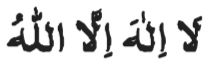 shine in the earth as it shines in heaven. The greatest of them, therefore, is he who highlighted this formula with such brilliance; who first exposed the impotence of false gods and proved their insignificance on grounds of reason and strength, and then, when he had proved everything, he left as a symbol of his decisive victory the testament 4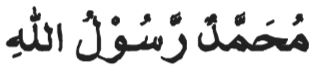
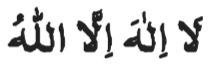 He did not pronounce
 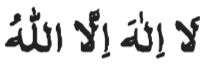 as an unproved assertion. No, he first proved it, and exposed the errors of false belief and then inviting the attention of the people declared, ‘Look, there is no God besides Him who has demolished all your might and shattered your pride.’ Thus it was that as the reminder of an established truth, he taught the blessed Kalima:
