After performing the wuzu, a Muslim stands for prayer with their face turned towards the Ka‘bah1. They say Allahu Akbar (Allah is the greatest) and raise both hands up to the ears (Illustration 1). After this they place the right hand over the left with both arms drawn over the chest. The fingers of the right hand grasp the left arm near the elbow (Illustrations 2a and 2b). From this moment on worshippers are forbidden to speak to anyone, look around or move from their place until the prayer ends. After entering this posture, the worshipper recites the following prayers:
Subhanakalla-humma wa bihamdika wa tabara kasmuka wa ta‘ala jadduka wala ilaha ghairuk.
Holy are You, O’ Allah and all praise is Yours; blessed is Your name and exalted is Your state. There is none worthy of worship except You alone.
They then recite:

A‘udhu billahi minash-shaitanir-rajim.
I seek refuge with Allah the Exalted from Satan the Accursed.
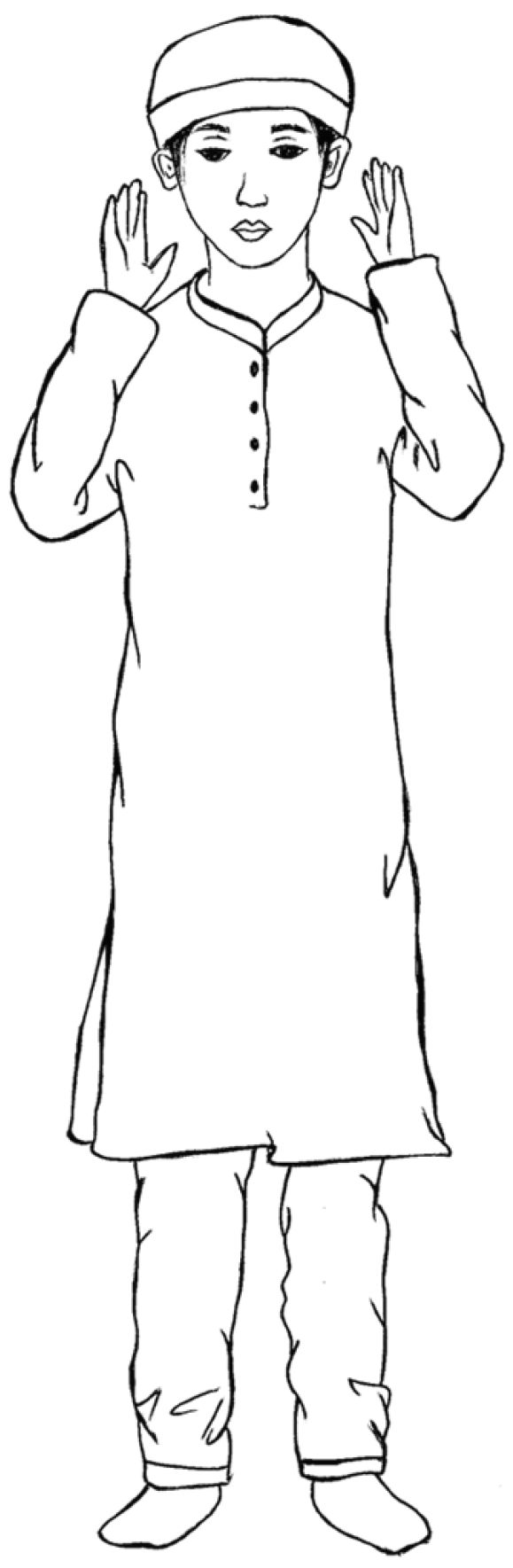
Illustration 1
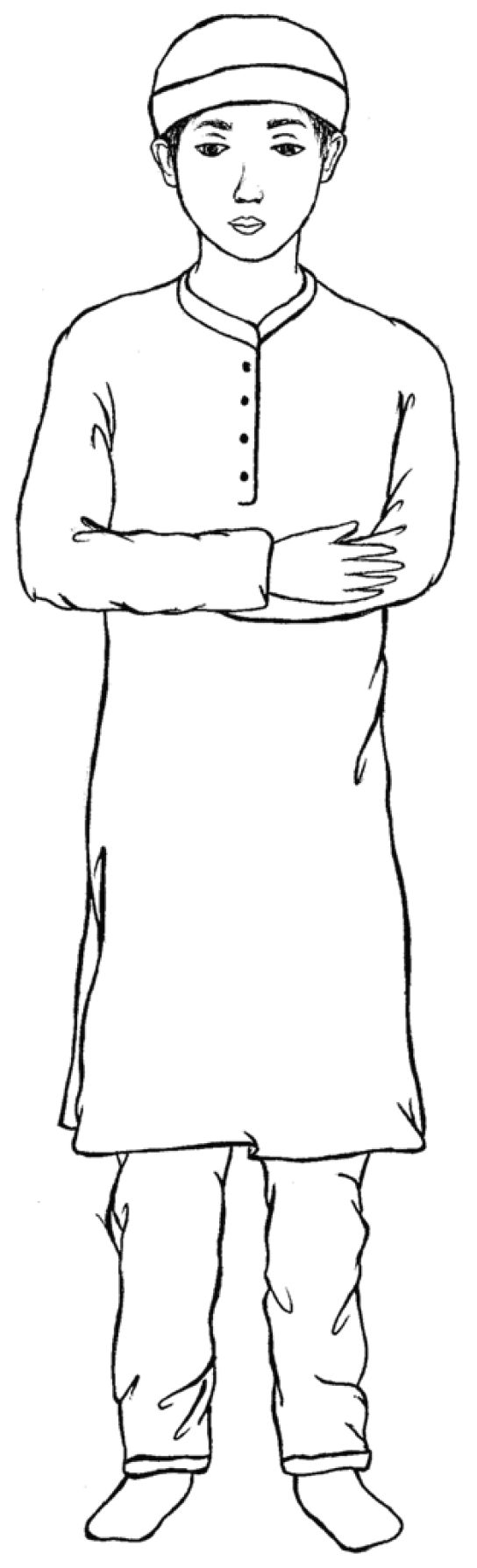
Illustration 2a
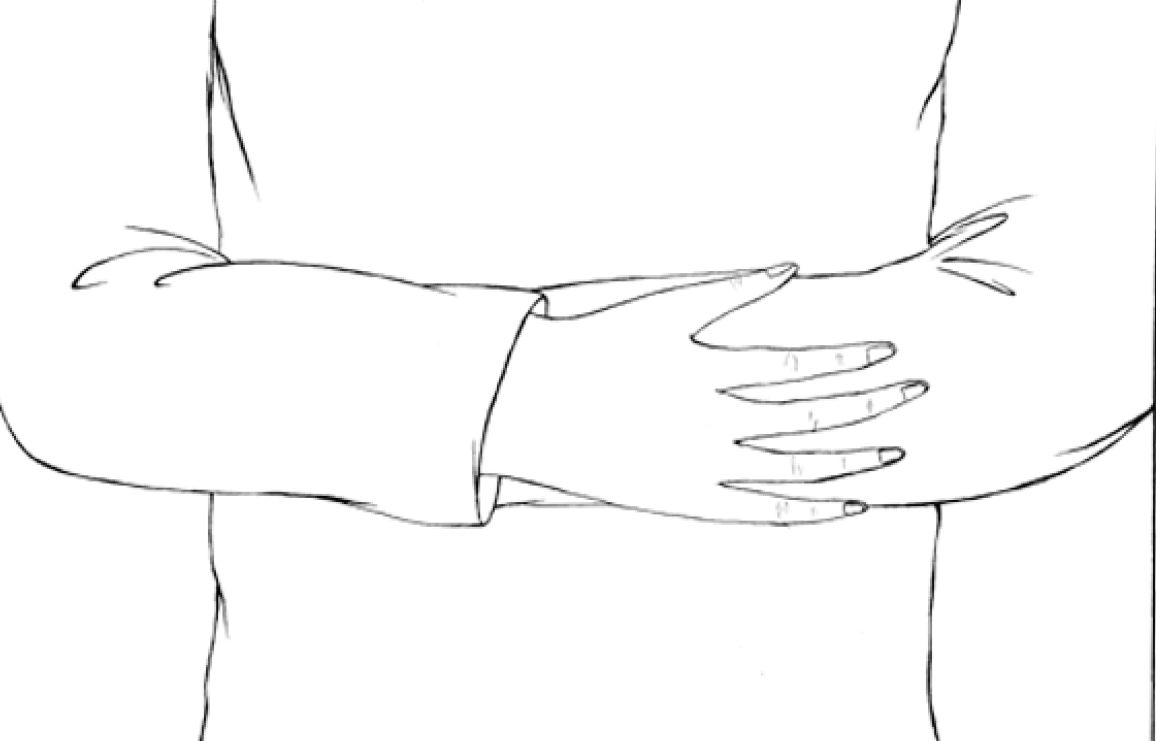
Illustration 2b
Following this the worshipper will recite the first chapter of the Holy Qur’an which is known as Surah Al-Fatihah [the Opening]2:
Bismillahir-Rahmanir-Rahim. Al hamdu lillahi Rabbil ‘alamin. Ar-Rahmanir-Rahim. Maliki yaumiddin. Iyyaka na‘budu wa iyyaka nasta‘in. Ihdinas-sirat al-mustaqim. Siratalladhina an‘amta ‘alaihim, ghairil maghdubi ‘alaihim wa laddallin.
I begin by invoking the name of Allah Who bestows bounties (like sunlight and air) and Who does not let anyone’s labours go to waste. I declare that Allah the Exalted, Who is the Sustainer of all creation is alone and worthy of all praise. He grants blessings without consideration of actions but also gives multiple rewards for one’s deeds— no enterprise is unrewarded. Sin and virtue earn their rightful consequence in accordance with the commandment of God. (And I say unto God Who I have just extolled) we submit to You alone and seek only Your help in all our works. Show us the right path in all things, the path taken by those on whom You have bestowed Your favours. And once we earn Your love, let it not be the case that we should for any reason incur Your wrath or that we should willingly abandon You and go astray.4
After the recitation of this chapter the worshipper says amin meaning—so be it, my Lord!
After this the worshipper recites a passage from the Holy Qur’an of any length of their choosing.5
Then the worshipper frees their arms and says Allahu Akbar and bows until their head is aligned with their waist while their hands rest above their knees (Illustrations 3a and 3b).
In this position the following words are repeated at least three times:
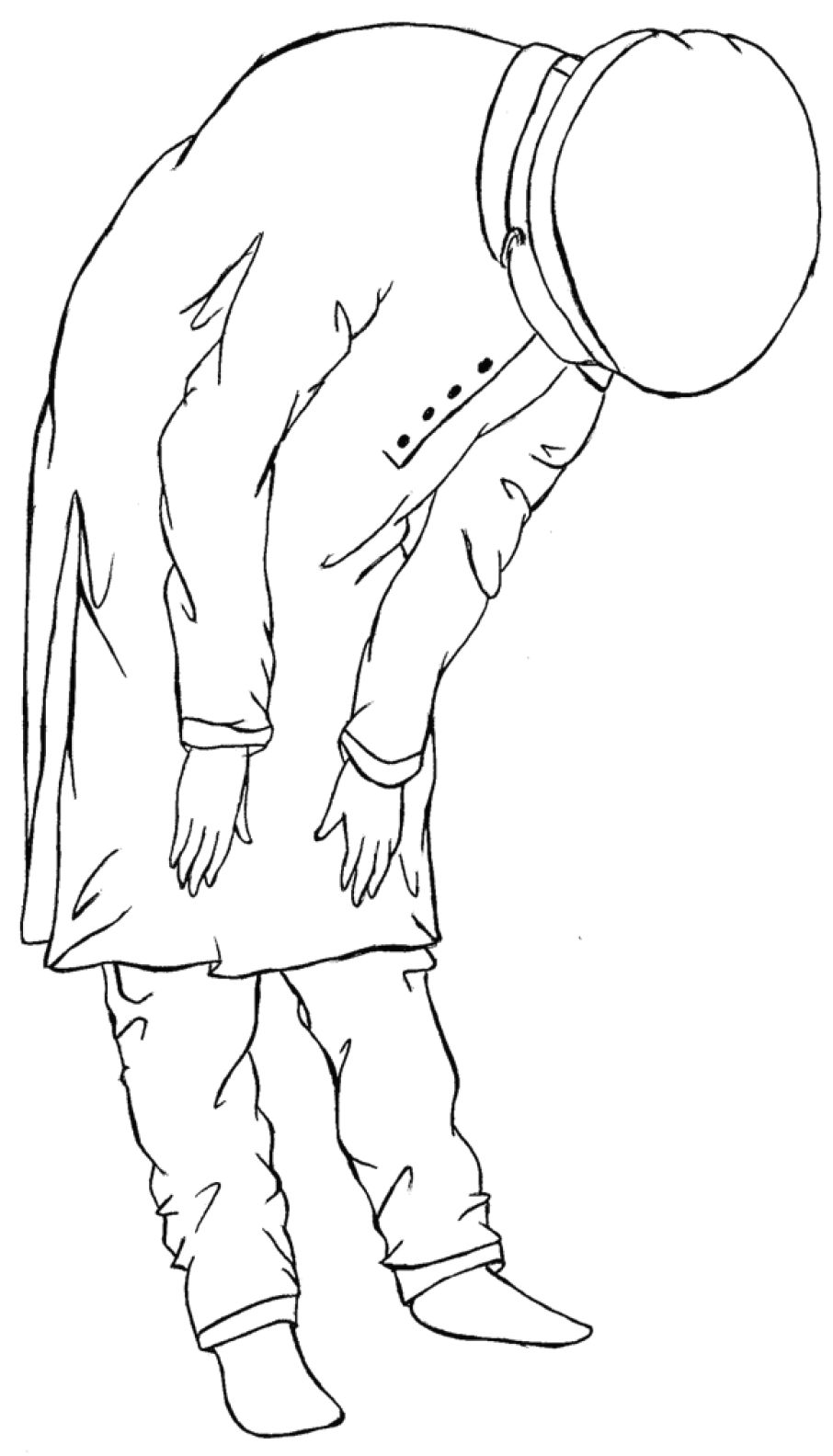
Illustration 3a
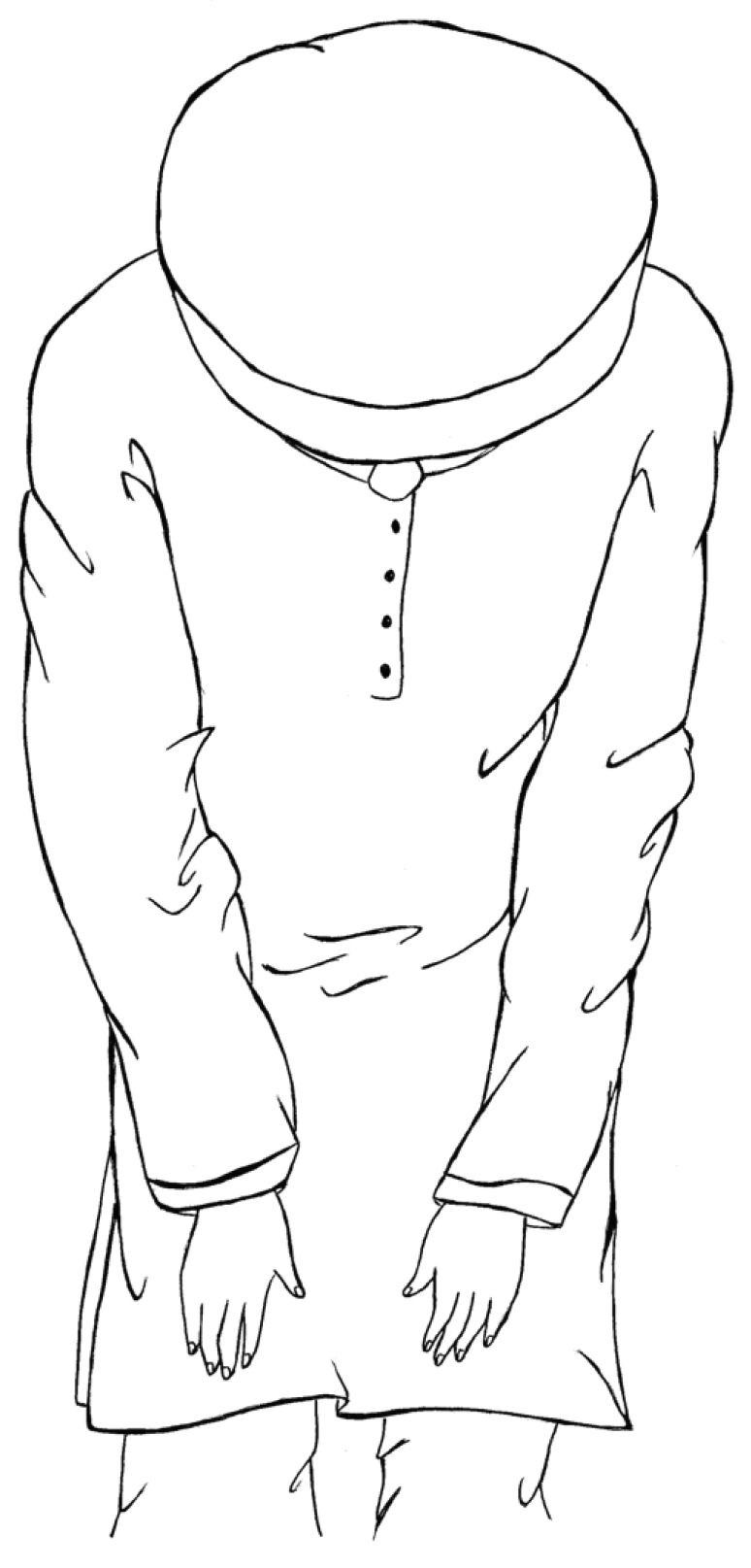
Illustration 3b
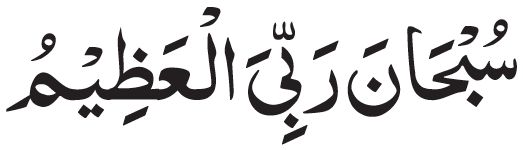
Subhana Rabbiyal ‘Azim.
Holy is my Lord the Most Great.
The worshipper stands erect again with hands to the side (Illustration 4) and says:
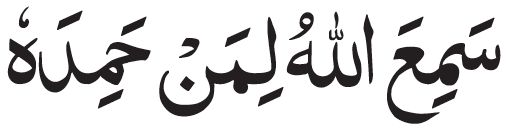
Sami ‘allahu liman hamidah.
Allah the Exalted hears the prayers of those who extol His glory.
In the same position they then recite:

Rabbana walakal hamd, hamdan kathiran tayyiban mubarakan fih.
Our Lord! To You belongs all praise, the praise which is bountiful, pure and blessed.
Once again the worshipper says Allahu Akbar and bows in prostration (Illustrations 5a and 5b) and repeats the following words at least three times:
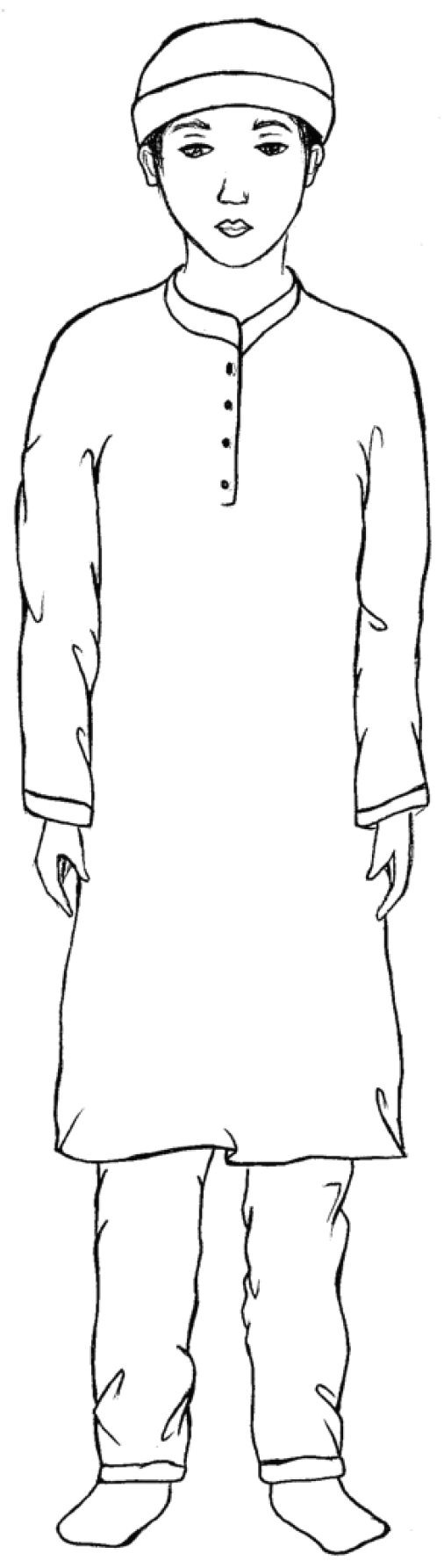
Illustration 4
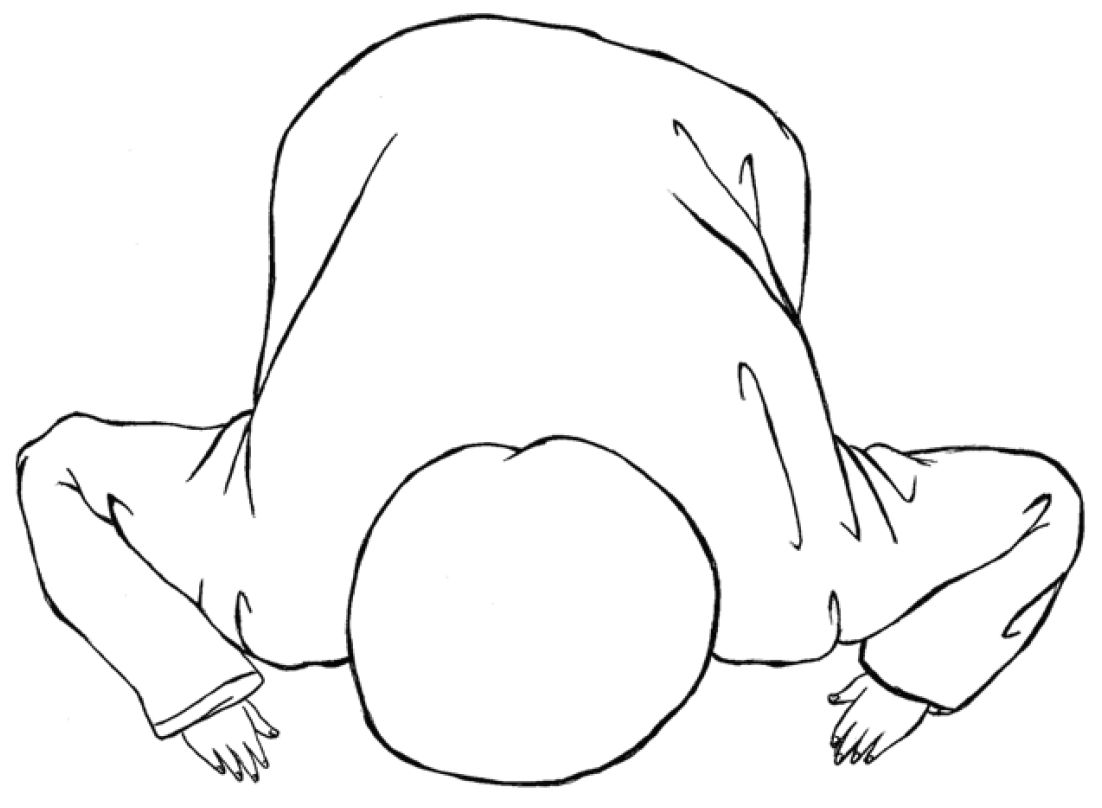
Illustration 5a
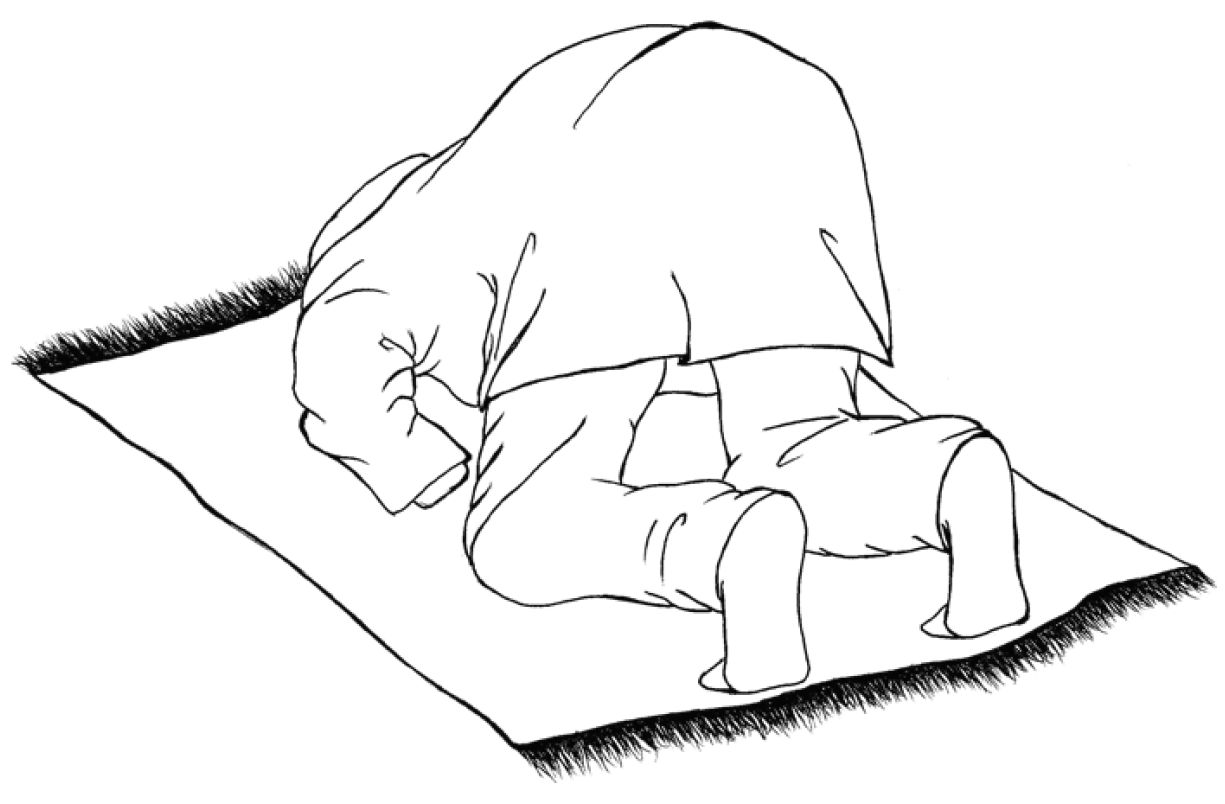
Illustration 5b
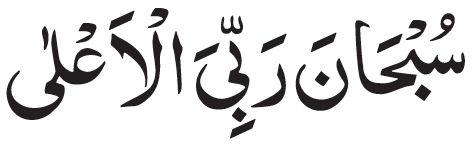
Subhana Rabbiyal a‘ala.
Holy is my Lord the Most High.
Then with the words Allahu Akbar the worshipper moves to a sitting posture with their hands resting over their knees (Illustration 6). The right foot is erected on the toes while the left foot is laid flat to help the worshipper sit. In this position the worshipper recites:

Allahummaghfir li warhamni wahdini wa ‘afini warfa‘ni wajburni warzuqni.
O’ Allah forgive me my sins and have mercy on me and guide me and grant me security from every type of evil and grant me honour and reform me and provide for me sustenance.
Again the worshipper says Allahu Akbar and returns to the prostration position where they recite the same words as were recited in the previous prostration. Then with the words Allahu Akbar the worshipper returns to the standing position.
(This entire process is called a rak‘at. A full namaz comprises of two, three or four rak‘at.)
The second rak‘at of the namaz is performed just like the first [with the following differences].
First, the prayer with which the namaz began, subhanakallah-humma wa bihamdika, is not recited again and the rak‘at commences with the recitation of Surah Al-Fatihah which is followed by the recitation of another passage of the Holy Qur’an. After this the process remains the same as the first rak‘at.
Secondly, when the worshipper completes both prostrations, they do not enter the standing position as they did in the first rak‘at, but instead sit on their knees as they did between the two prostrations and recite the words:
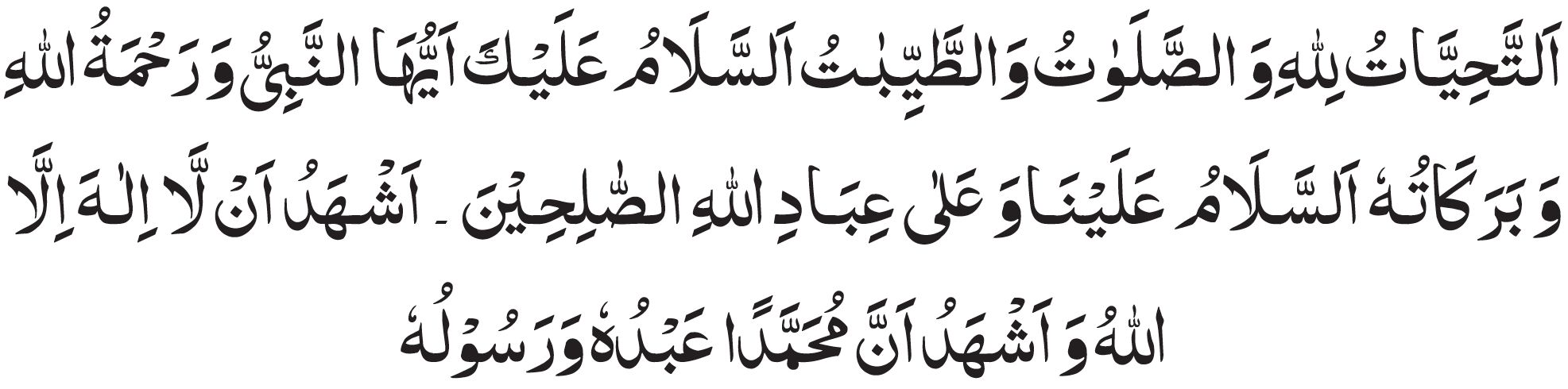
Attahiyyatu lillahi was-salawatu wat-tayyibatu assalamu ‘alaika ayyuhan-Nabbiyyu wa rahmatullahi wa barakatuhu. Assalamu ‘alaina wa ‘ala ‘ibadillahis- salihin. Ash-hadu alla ilaha illallahu wa ash-hadu anna Muhammadan ‘abduhu wa Rasuluh.
All salutations, whether made through words, physical actions or charity are for Allah (in other words one cannot worship anything other than Allah the Exalted in any manner). Peace be upon you, O’ Prophet, and the mercy of Allah the Exalted and His blessings (that is to say, their increase); and peace be on us and on all righteous servants of Allah the Exalted. I bear witness that there is none worthy of worship except Allah, He is One and has no partner and I bear witness that Muhammad(sa) is His servant, His creation (he is neither God nor the son of God) and His messenger.
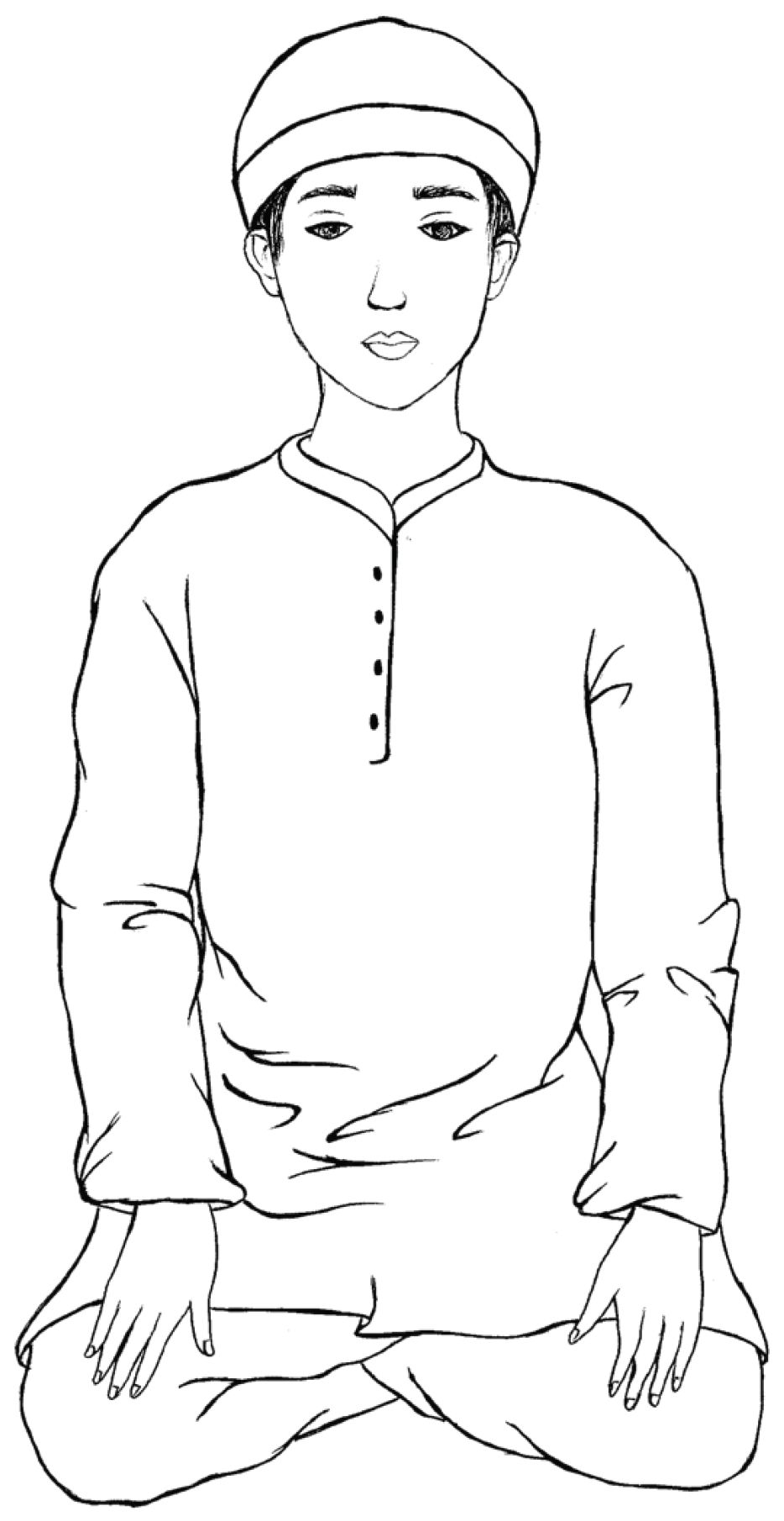
Illustration 6
The latter part of this prayer [from the words I bear witness onwards] is known as tashahhud.6
Then remaining in the sitting position the worshipper says:
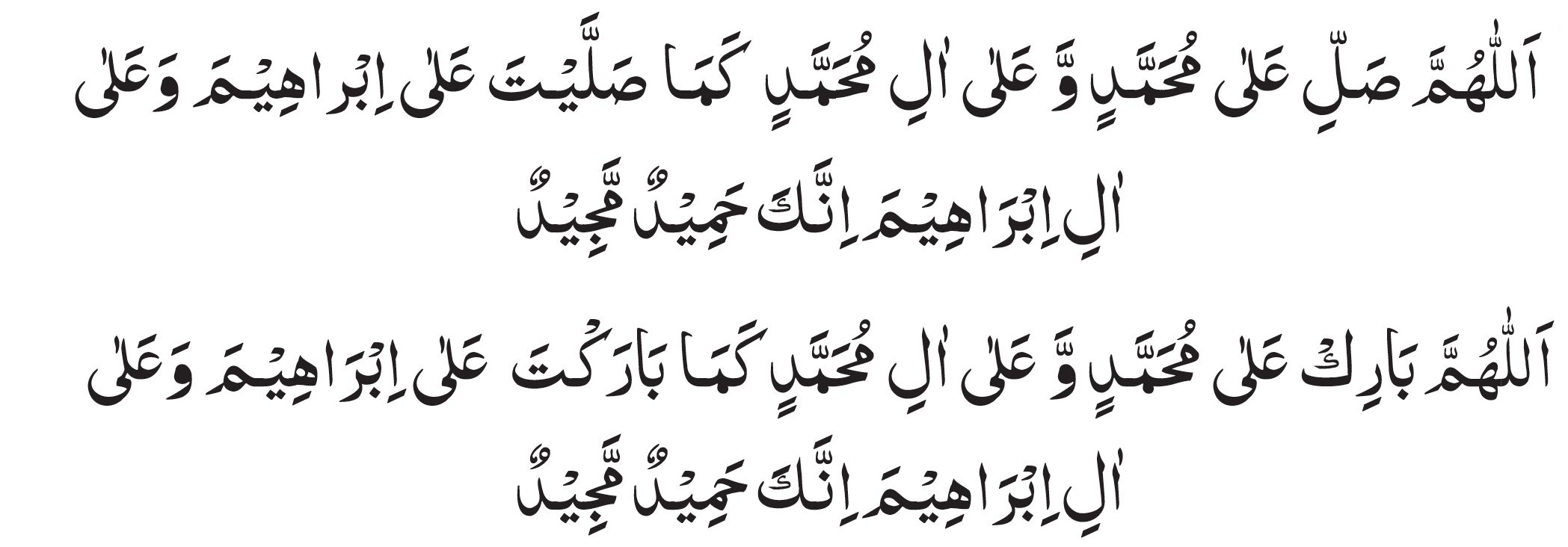
Allahumma salli ‘ala Muhammadin wa ‘ala ali Muhammadin, kama sallaita ‘ala ibrahima wa ‘ala ali Ibrahima innaka Hamidum-Majid.
Allahuma barik ‘ala Muhammadin wa ‘ala ali Muhammadin kama barakta ‘ala Ibrahima wa ‘ala ali Ibrahima innaka Hamidum-Majid.
Bless, O’ Allah, Muhammad(sa) and the true followers of Muhammad(sa), as You did bless Abraham(as) and the people of Abraham(as). You are indeed the Praiseworthy, the Glorious.
Prosper, O’ Allah, Muhammad(sa) and the true followers of Muhammad(sa), as You did prosper Abraham(as) and the true followers of Abraham(as). You are the Praiseworthy, the Glorious.
This invocation is known as Durud. Again in the same position the worshipper recites one or more of the following prayers:
Allahumma inni zalamtu nafsi zulman kathiran wa la yaghfirudh-dhunuba illa anta faghfir li maghfiratan min ‘indika warhamni innaka antal Ghafurur Rahim.
Allahumma inni a‘udhu bika minal-hammi wal ghammi wa a‘udhu bika minal-jubni wal-bukhli wa a‘udhu bika minal ijzi wal kasali wa a‘udhu bika min ghalabatid-daini wa qahrir-rijal.
Rabbij‘alni muqimas-salati wa min dhur-riyyati. Rabbana wa taqabbal du‘a. Rabbanaghfir li waliwalidayya wa lil-mu’minina yauma yaqumul hisab.
Rabbana atina fiddunya hasanatan wa fil akhirati hasanatan waqina adhabannar.
O’ Allah I have been unjust to myself and no one grants pardon for sins except You; therefore, forgive me with Your forgiveness and have mercy on me. Surely You are the Forgiver, the Merciful.
O’ Allah I seek Your protection against problems and anxieties, and I seek Your protection against cowardice and miserliness, and I seek Your protection against helplessness and shiftlessness, and I seek Your protection against indebtedness, and I seek Your protection to keep my freedom and to protect me from the tyrannical rule of any individual.
My Lord make me observe Prayer, and my children too. Our Lord! Accept my prayer. Our Lord, grant forgiveness to my parents and I and the believers on the day when the reckoning will take place.
Our Lord, bestow on us good in this world and good in the hereafter, and shield us from the torment of the fire.
Finally, the worshipper turns their face towards the right (Illustration 7) and says11:

Assalamu ‘alaikum wa rahmatullah.
Peace be upon you and the mercy of Allah.
Then the worshipper turns their face towards the left and says the same words. The namaz is now finished and the worshipper is free to do as they please. A prayer performed in accordance with the instructions set out above ought to take a few minutes to perform.
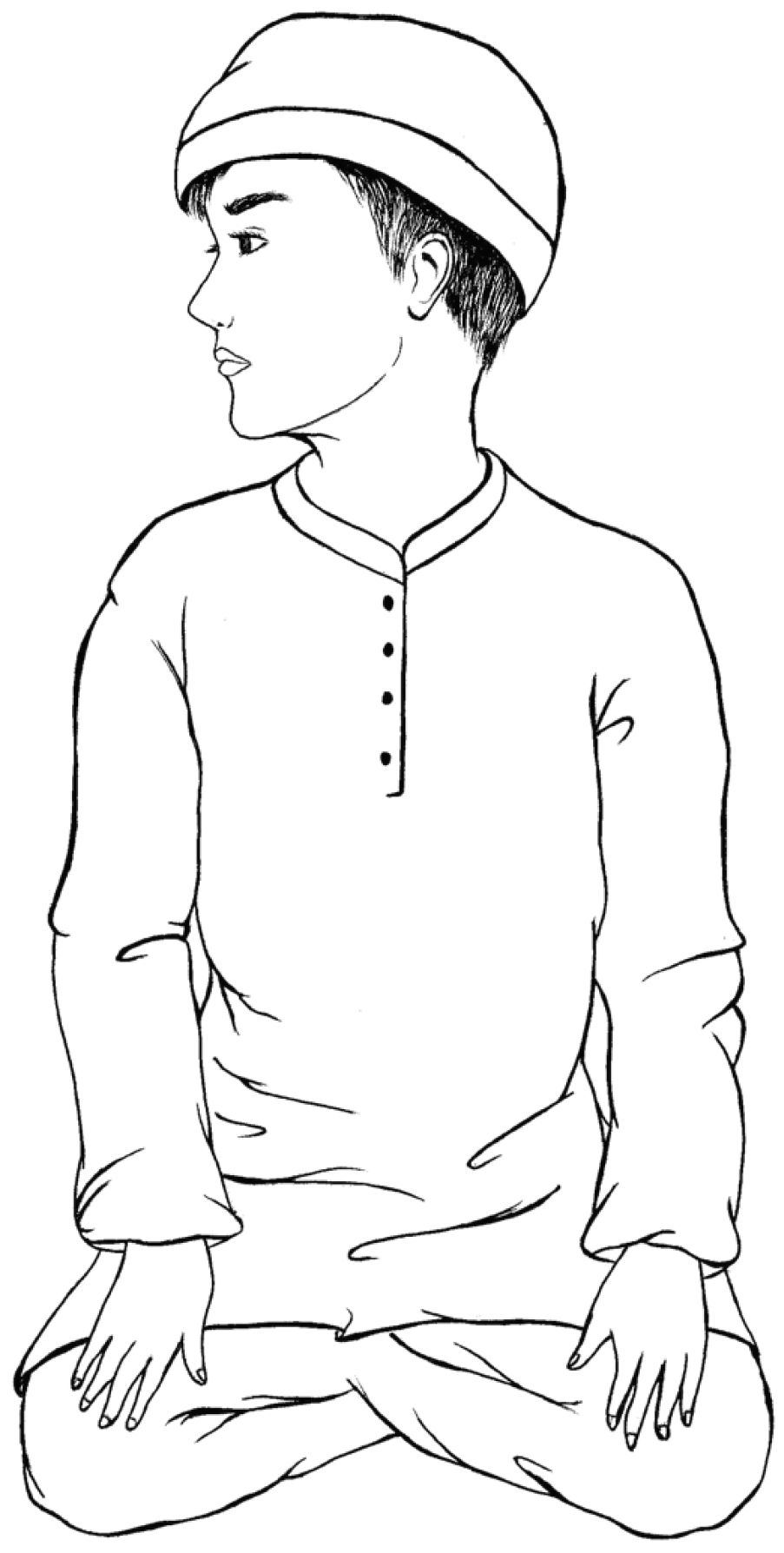
Illustration 7
1 When Muslims face the Ka‘bah during the namaz this does not mean that they consider it an object of worship. Rather, when this [house of prayer] was being built, Abraham(as) supplicated to God to raise a prophet from here who would guide people and purify them.
Because the Holy Prophet(sa) claimed to be the prophet [who came in fulfilment of this prayer]—Muslims face the Ka‘bah to remind themselves of this promise and to seek to reform their deeds. In the Holy Qur’an Allah the Exalted says:
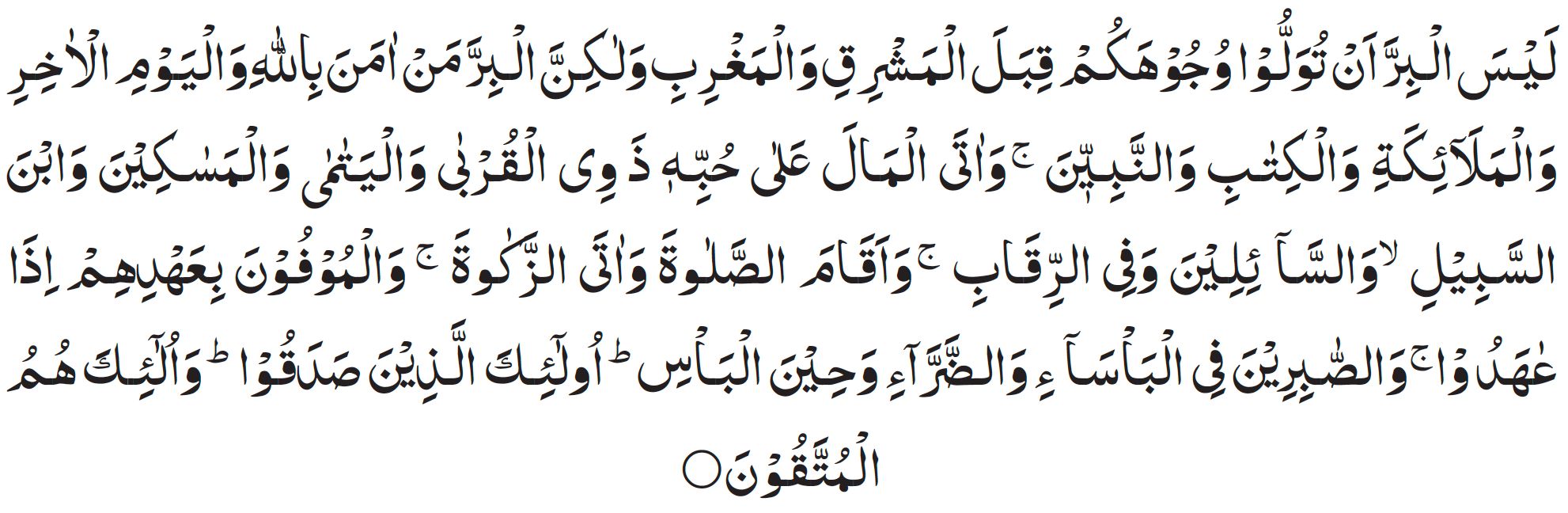
It is not righteousness that you turn your faces to the east or the west, (that is, do not think facing the Ka’bah is an act of virtue) but truly righteous is he who believes in Allah and the Last Day and the angels and the Book and the prophets, and spends out of the wealth he holds dear on the kindred and the orphans and the needy and the wayfarer and those who ask for charity, and for ransoming the captives; and who observes prayer and makes financial sacrifices for his pleasure; and those who fulfil their promise when they have made one, and are patient in poverty and afflictions and the steadfast in time of war; it is these who have proved truthful and it is these who are the God-fearing. Surah Al-Baqarah, 2:178 [Publishers]
2 It is incumbent on worshippers to recite this prayer before the recitation of any other Qur’anic verse. [Publishers]
3 Surah Al-Fatihah, 1:1-7 [Publishers]
4 All religions impart an ideal to their followers and the best ideal is that which is taught by Islam. It is unparalleled by anything else, for in this supplication Muslims are taught to pray [that they be lead] on the same path as those on whom God showered His blessings. In other words, they are taught to pray for that rank which Allah the Exalted conferred on His chosen ones. In another verse of the Holy Qur’an the chosen ones of God are defined as a Anbiya’ (prophets), Siddiq (the truthful), Shuhada’ (martyrs) and Salihin (holy persons). Further the Holy Qur’an says:

And remember the time when Moses said to his people, “Recall the favour of God, when He sent among you His prophets and granted you kingdom and gave you that which was not given to anyone else.” Surah Al-Ma’idah, 5:21
Similarly, in various other passages, God has explained that by His chosen ones He means the prophets. Thus Islam has made prophethood the ultimate goal of every Muslim, in so much as, all Muslims are taught to pray that they be made part of the chain of prophethood. This ideal has not been bestowed on any other faith. All other religions have firmly closed on themselves the door of divine revelation. It is only Islam which teaches its followers that the door to divine revelation can never be shut, and that it is impossible that God, Who at one time discoursed with men and women from among the Children of Israel and [other past communities], would cease to discourse with and guide His creation in the future.
This ideal is neither impractical, nor impossible to achieve. It offers those possessed of a noble heart a continual course of progress and fixes their goal not on any inferior objective, but rather on the attainment of direct communication with the creator of the universe, the sovereign of all sovereigns and the master of absolute love. And with this aim in front of them, many Muslims [have since the birth of Islam], offered their examples of enjoying direct communion with Allah the Exalted.
The Holy Prophet(sa) even foretold the advent of a great recipient of revelation whom he named as the Mahdi and Messiah. He would be known as the Mahdi by virtue of reforming the Muslims of his time who would be engrossed in error, distant from the truth of Islam and by whose words and deeds none would be able to recognise the excellences of Islam. And he would be known as the Messiah, for he would fulfil those prophecies which spoke of the second coming of Jesus(as), and reform the world of Christianity for they would have erred from the teachings of Jesus(as), and bring them back to the right path.
Accordingly, this person appeared in India in the town of Qadian. Over the course of the next thirty years or so, he established the truth of Islam through heavenly signs, and there are thousands of his followers alive today who, having been reformed by him, are recipients of divine revelation. He inculcated his community with such a zeal for spreading his message that they are fast bringing the world over towards themselves.
At the present time, Chaudhry Fateh Muhammad Sayyal M.A and Abdul Rahim Nayyar are preaching his message to the people of England and Mufti Muhammad Sadiq is spreading his teachings in the United States.
The knowledge that revelation can occur at any time is so encouraging a glad tiding that it is necessarily a source of strength for all true Muslims. [Divine discourse] also offers an easy criteria by which to judge the different religions [of the world]. A true and living religion must be one which bears fruit. And the fruit of religion is revelation. Thus the highest objective Islam has determined for its followers, is one which excels that of other religions, and satisfies the needs of human nature.
The most potent argument possessed by atheists against religion is that if God exists why does He not converse with anyone. But no such allegation can be made against Islam, for Islam does not depend on tales of the past for proof of its veracity. Instead Islam claims that even today there are those, who after having received guidance from the imam and reformer of the present age, enjoy divine discourse.
Those who wish to learn more about the Messiah and Mahdi can happily correspond with me at the following address—Mirza Bashir-ud-Din Mahmud Ahmad, Qadian, District Gurdaspur, Punjab, India.
5 Various passages from the Holy Qur’an are included at the end of this book for the benefit of those who are not aware of the contents of the holy book of Islam.
6 Because [in the past] various communities had exalted their prophets to such a degree that they conferred on them a divine rank or considered them equal to God or the son of God, Islam has made it incumbent on its followers to profess the fact of their creation when proclaiming the unity of God. For otherwise [there was a danger] Muslims would begin to consider their prophet God or the son of God. Therefore, Muslims affirm their prophet was a servant of Allah. He is distinguished only by the fact that he is a prophet, just like many other prophets.
7 Bukhari, p. 1100, 1999 Riyadh, hadith no. 6326 [Publishers]
8 Abu Dawud, p. 228, 1999 Riyadh, hadith no. 1555 [Publishers]
9 Surah Ibrahim, 14:41-42 [Publishers]
10 Surah Al-Baqarah, 2:202 [Publishers]
11 This is only in those cases where the namaz is two rak‘at. If the prayer comprises of three or four rak‘at then the worshipper ought to stand after reciting the tashahhud and perform the remaining one or two rak‘at in the prescribed manner, reciting all the relevant passages and words mentioned above and complete the namaz in the manner that has been laid out. [Publishers]