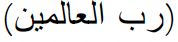
 ; that is to say, God creates everything and then fosters everything gradually towards perfection.
One special feature that distinguishes the Quran from all other Scriptures is that it deals adequately with all problems arising within the sphere of religion and by stressing the function of religion it directs attention to its proper sphere and the benefits that may be derived from it. A reader of the Old and the New Testaments or of the Vedas or of the Zend-Avesta is left with the impression that somebody appearing at an intermediate stage in the middle of a long drawn-out phenomenon of nature had set out to describe those stages of it of which he had been a witness. That is not the case with the Quran. It expounds the philosophy of creation and all matters connected therewith. It explains why God created the universe and the object of man’s creation and the means to be adopted for the achievement of that object. It sheds light on the nature of the Godhead and its attributes and the manner in which those attributes find their manifestation. In connection with the object of man’s creation it expounds the laws on which the running of the universe is based. It points out that for the physical development and evolution of man God has put into force the laws of nature which regulate the physical and mental conditions of man and that one group of angels is entrusted with the enforcement of these laws. For the development and enlightenment of the human soul God has revealed the Law of Shariah (i.e. Sacred Law) through His Prophets. In some cases the revelation, containing the Sacred Law has been limited in character but there has also been the revelation containing the complete and perfect code of the Sacred Law. In other cases the object of the revelation has been to restore the Sacred Law to its original purity after it had suffered from human misinterpretation. In other words, God raises Prophets among mankind with different objects. Some Prophets are Law-bearers, and through them a new dispensation is revealed. The function of others is limited to the modification of an already revealed Law while still others are entrusted with the duty of sweeping away misinterpretations of the Law. The Quran also explains the need for, and the benefits to be derived from, the Law of Shariah and its function in relation to the evolution of man.
The Quran points out the distinction between God and His attributes, appreciation of which enables us to judge the error of those who have said, “In the beginning was the word, and the word was with God and the word was God.”1 The Quran teaches that an attribute cannot become the substitute of the being and that the two are entirely distinct.
The Quran explains to what extent man is left free to determine his course of action and to what extent he is subject to compulsion. It teaches that man has been left with enough choice to make him responsible for his actions to God and to enable him to embark upon a continuous course of self-improvement. On the other hand, the sphere of his activities is circumscribed and it is not possible for him to transgress its limits. Despite all effort, it is not possible for man to discard the limitations to which human life is subject. He cannot sink into a condition of static solidity nor climb to an ethereal existence. Within his own sphere, however, he possesses great faculties and large powers and is capable of continuous improvement and progress.
The Quran explains the need of belief in God and draws attention to the proofs of His existence. It emphasises that God has always sent down His word by means of revelation in times of darkness and that He manifests His power through extraordinary Signs and thus gives irrefutable proof of His existence. The Prophets and their perfect followers are indispensable for the purpose of creating in men’s minds perfect faith in God. If God were to cease to manifest His attributes through the Prophets and their followers, mankind would become a prey to doubt and uncertainty and firm faith in the existence of God would disappear. It is imperative, therefore, that so long as mankind continue to exist, divine revelation should continue to descend upon some of them. Faith in the existence of God can be maintained only through this means. From the inception of the universe God has spoken to man through His Prophets down to Jesus and on to the Holy Prophet of Islam, just as He has throughout continued to manifest His attributes of creation, hearing and seeing. In the same manner He will continue to speak till the end of time to His chosen servants and will continue to manifest His existence by these means. Reason revolts against the suggestion that God exercised His attribute of speech up to the time of Jesus but became silent thereafter or that He exercised this attribute up to the time of the Holy Prophet and thereafter became dumb for ever. As we repudiate as blasphemous any suggestion that God possessed the attribute of seeing up to the time of Jesus or up to the time of the Holy Prophet but that thereafter He ceased to see or that He was capable of creating up to the time of Jesus or up to the time of the Holy Prophet but that thereafter He lost the attribute of creation or that He was All-Powerful up to the time of Jesus or the Holy Prophet but thereafter He ceased to have any power, so we must repudiate the suggestion that God spoke up to any particular period and thereafter ceased to speak. All His attributes are perfect and everlasting. This is a self-evident truth, yet Christians, Jews, Zoroastrians and a very large majority of those who call themselves Muslims have come to believe that revelation came to an end with Zoroaster or with the Prophets of Israel or with Jesus or with the Holy Prophet. The Quran utterly rejects such a notion. The Quran teaches belief in a living God and puts forward as proof the fact that He will continue ever to speak to His chosen and righteous servants as He has always spoken to them. The truth of this doctrine taught by the Quran has been confirmed in this age by the appearance of the Promised Messiah, the Founder of the Ahmadiyya Movement. Once more the revelation received by him and by his true followers stands out as a challenge to all those who assert, if not by word of mouth, at least by the doctrines they preach, that God has lost His attribute of speech.
The Quran teaches that divine revelation has not been confined to any particular people but that God has raised Prophets among all peoples. It explains why it was necessary to send Prophets one after the other; why a perfect Law was not revealed in the early stages of man’s history. It deals at length with the subject of the Unity of God and sets out convincing proofs in support of it. It demonstrates that a plurality of gods would offend both against reason and against fact. It explains in what manner the doctrine of the Unity of God helps man in his spiritual advance.
The Quran sheds a flood of light on the question of prophethood. The word “prophet” or its equivalents have been freely used in religious Scriptures but not one of them explains the conception underlying prophethood. Who may be called a Prophet and who may not be so called and what are the different kinds of prophethood? The Quran alone defines a Prophet and draws a distinction between different kinds of prophethood. It explains the difference between a Prophet and a non-prophet and defines the duties of a Prophet and a Prophet’s relationship to God. It also explains why Prophets are raised and what should be the relationship between them and their followers and between them and those who do not believe in them. It defines the rights of a Prophet and explains whether a Prophet stands as a barrier between God and man or is only a helper and a guide.
The Quran deals in detail with the subject of angels, their functions and the purpose for which they have been created.
It also explains what Satan is and in what manner the existence of such a being is of help to man. What is the relationship between man and Satan? How can a man guard himself against satanic promptings? Has Satan power to force a man to adopt a particular course of action? It points out that angels ever prompt a man to good and Satan ever prompts him to evil and that man has the option to accept or reject the good promptings of angels and equally to accept or reject the evil promptings of Satan. These two categories of beings have been created to help man towards perfection and to invest his existence with reality. In the absence of angelic and satanic promptings man would not be entitled to any reward nor would he deserve any punishment. A man’s fight against satanic suggestions makes him worthy of reward and opens the way of progress to him; his turning away from angelic suggestions and promptings makes him liable to punishment.
The Quran expounds the philosophy of prayer and points out how one ought to pray, under what circumstances prayers may be accepted and what kind of prayers may not be accepted and what is the sphere within which prayer operates.
It discusses good and evil and defines both and explains where their boundaries meet. It defines absolute good and absolute evil and relative good and relative evil. It points out the way of acquiring high moral qualities and goodness and how evil may be avoided. It sheds light on the sources of good and evil and teaches man to clean out the source of evil.
It treats of repentance and explains what true repentance means. It enumerates the benefits to be derived from repentance, explains the requisites of true repentance and when repentance may be resorted to. It also explains the principles upon which rewards and penalties are based and the factors to which regard is had in adjudging them. It explains the relationship between transgression and punishment and how they ought to be adjusted to each other.
The Quran explains what salvation is and how it is attained. It teaches that salvation is of three kinds: (1) Perfect; (2) Imperfect; and (3) Deferred. Perfect salvation is attained in this very life. A person who attains imperfect salvation in this life gradually perfects the means of attaining salvation after death. Deferred salvation is attained only after suffering for a period the punishment of Hell. The teachings of Christianity and Islam with respect to this last kind of salvation have one feature of resemblance but are at variance with each other in a fundamental respect. Christianity teaches that even this kind of salvation can be achieved only by those who believe firmly in the doctrines of Christianity but who may have failed to attain perfect salvation in this life. These are the people who, after passing for a period through the torments of Hell, would attain perfect salvation. Islam, on the other hand, teaches that every human being has been created with the purpose that he or she will ultimately attain perfect salvation. The most rabid disbeliever and wrongdoer after being subjected to certain kinds of reformatory treatment, one of which is the torment of Hell, would ultimately attain salvation and would enter Paradise. In this connection the Quran emphasises the doctrine of weighing and balancing of actions. It teaches that the preponderance of good actions in a man’s life is proof of sincere effort on his part to attain salvation and that a person who dies while making a sincere effort to attain an object is like a soldier who is killed before victory is achieved. Death is controlled entirely by God. A soldier on the field of battle has no power to postpone it till after victory is achieved. In the same way a person who is struggling sincerely to attain salvation has no power to postpone death till his struggle ends in victory. If such a person dies in the middle of this struggle, he becomes deserving of the Grace and Mercy of God and not of His wrath and punishment. No nation has ever condemned its warriors for being killed before victory was achieved. Every soldier who sincerely strives for victory is honoured. The same is the case with a person who strives to overcome Satan and, in spite of ups and downs, continues to sustain the struggle steadfastly and with courage till the end so that God’s Kingdom may be established. According to the Quran such a person is certainly deserving of salvation. His weakness is not a blemish but an ornament, for he was not thereby deterred from joining the ranks of those fighting on the side of God and did not hesitate to sacrifice himself in the struggle.
The Quran describes the stages of spiritual evolution and explains their number and details. For instance, it explains the kinds and degrees of purity, chastity, charity, truthfulness, mercy, kind treatment, etc. Thus, it enables a man to plan in accordance with his moral and spiritual development. By thus placing the immediate objective within a man’s reach it encourages him to set out on the path of progress, and by setting out before him a series of ever-higher objectives it incites him to greater effort at each stage. It thus carries man forward on the path of progress step by step and stage by stage.
The Quran sheds light on man’s intellectual evolution also and explains how it is carried out and teaches that divine wisdom in judging of a man’s actions takes into account his intellectual development. He who was fortunate enough to be nurtured in a favourable environment and for whom the path of virtue was made easy may be judged by a standard different from that applied to a person whose intellectual development was inferior to the former and whose environment was not so favourable. Allowance would be made for the latter in respect of the handicaps against which he had to struggle.
The Quran explains what faith is; how it may be acquired, and how it may be known. It explains the need of the Law of Shariah and its philosophy. It teaches that God’s Law is based upon wisdom and is designed to help man forward on the path of progress. God’s commandments are not devised as a burden or a penalty for His servants but each of them is designed as an aid and a prop to man in his progress and to help to improve his social environment. The Quran does not support the doctrine of the compulsory imposition of commandments and penalties. It teaches that God condemns no person without taking into full account every circumstance that might excuse or palliate his conduct. It also teaches that no man may be condemned unless he has had due warning in advance.
Christian writers have asserted that, apart from the claim that it is unique in its language and its philosophy, the Quran does not prefer any claim to miracles. It is necessary to explain in a few words the attitude of the Quran towards miracles.
The Quran puts forward two fundamental doctrines. First, that there are certain divine laws which are not subject to variation. For instance, the Quran teaches that a dead person never comes back to life upon this earth, and that nobody except God possesses the power of creation. The world may produce artificers, technicians and inventors but the attribute of creation manifests itself only through the work of God. As regards the first of these two matters God says in the Quran:
Until, when death comes to one of them, he says entreating, “My Lord, send me back, that I may do righteous deeds in the life which I have left behind”. By no means, it is but a mere word that he utters. And behind them is a barrier until the day when they shall be raised again.2
Again; it says:
And it is an inviolable law for a township which We have destroyed that they shall not return. It shall be so even when Gog and Magog are let loose and they shall hasten forth from every height.3
The verses mean to say that God has decreed that the people that have passed away shall not return to the earth till Gog and Magog are released and spread over the earth from the summit of every hill and the top of every wave. This shows clearly that the dead cannot return to the earth. The reference to Gog and Magog in the last verse does not mean that the dead would be permitted to return to the earth at that time. As the release of Gog and Magog is one of the signs of the approach of the end of days, the verse means that this law will continue to operate till the end of days. Some grammarians have interpreted this part of the verse to mean that after the rise of Gog and Magog attempts would be made to resuscitate the dead but that these attempts would not be successful, meaning that science would make unsuccessful efforts to solve the riddle of death. In short, the Quran teaches that a dead person cannot be permitted to return to the earth.
It also teaches that nobody except God possesses the power to create. It says: And those on whom they call beside Allah create not anything, but they are themselves created. They are dead, not living; and they know not when they will be raised.4
The Quran also teaches that since wisdom is one of the attributes of God, nothing may be attributed to Him which is contrary to wisdom. God is referred to as The Wise at several places in the Quran. At one place it says:
What has happened to you that you expect not wisdom and staidness from Allah.5
In this verse God reprimands the disbelievers saying that while they claim that all their actions are based upon wisdom, they do not make the same presumption with respect to God and attribute to Him things that are contrary to wisdom.
It follows therefore that if anything contravening any of these three laws, that have been cited as instances, is alleged to have occurred at any time, the Quran would reject it whether such occurrences are described as miracles or mysteries or magic. The Quran does not admit the possibility of any such occurrence and does not attribute any such miracle to any of the Prophets, nor does it claim any such miracle on behalf of the Holy Prophet himself. It is not to be thought of any reasonable person that he would first make a law or prescribe a rule and then himself proceed to contravene it. How is it possible then to think that God, Who is perfect Wisdom, would act in that manner? He who attributes things like this to the righteous Prophets of God in no way adds to the respect and honour in which they should be held but is guilty of an attack upon their intelligence and integrity. It is the duty therefore of every right-thinking person to refute allegations of this kind as they amount not to praise but to defamation of the persons concerning whom they are made.
The Quran, on the other hand, not only does not deny but positively claims that God makes His Prophets the means of certain kinds of manifestations which do not in any manner contravene His fundamental laws. This is a truth which cannot be controverted and this is the kind of miracle that the Quran claims for the Holy Prophet. Is it not a miracle that God should vouchsafe to a human being the sure knowledge of things hidden in the womb of the future? Is it not a miracle for God to bestow success and victory upon a weak and humble person not possessed of any visible means against strong, powerful and numerous opponents? The Quran claims not only that it is unique in itself but also that God bestowed upon the Holy Prophet the knowledge of things hidden and that He constantly manifested His power and glory in support of the Holy Prophet. How can it then be said that the Quran does not attribute any miracles to the Holy Prophet? In truth it makes that claim repeatedly. Was it not a miracle that the Holy Prophet was warned of severe opposition and persecution on the part of the Meccans when he himself had no reason to suspect that he would become the object of such opposition and persecution? Was it not a miracle that he was informed that he would have to migrate from Mecca and that even the time of the migration was indicated in advance? Was it not a miracle that several years before the Battle of Badr he was informed that such a conflict would take place in which the Muslims would be victorious and their enemies would be vanquished and that even the time of the conflict was specified? Was it not a miracle that the Holy Prophet was informed years before the event not only that he would have to migrate from Mecca but also that he would re-enter Mecca as a victor? Was it not a miracle that after the defeat of the Romans by the Persians in Syria the Holy Prophet was informed that within nine years the Romans would vanquish the Persians? Was it not a miracle that the Holy Prophet was told that Islam would spread throughout Arabia and would then prevail against all other Faiths? When every one of these events came to pass at its appointed time, what doubt could there have been left that every one of them constituted a miracle? All these matters and many others of a similar kind are narrated in the Quran. Then how can it be said that the Quran disclaims miracles on the part of the Holy Prophet? Those who are responsible for this assertion have been misled into making it on account of their lack of knowledge of the Arabic language and idiom and the style of the Quran. Where, for instance, the Quran says: “And nothing could hinder Us from sending Signs, except that the former people rejected them”,6 it does not mean, as Christian writers appear to have apprehended, that God declines to show any further Signs. The verse means that people for whose benefit Signs were shown in previous ages did not accept them and this might have been a reason for showing no further Signs, but God would not cease to manifest His Signs on that account. The people rejected the Signs shown by the earlier Prophets and yet Signs were shown in support of later Prophets; thus there was no reason why Signs should not have been shown in support of the Holy Prophet of Islam.
Again, when in answer to the demands of disbelievers the Holy Prophet was directed in the Quran to say that he was but a human being like unto others, it did not mean that God did not show Signs in his support. All that was meant was that Signs were shown by God and that the Holy Prophet could not produce them at his will. This is a fundamental truth and the statement of it by the Quran enhances our appreciation of it. Which of the two persons is a follower of the truth and which of them is in error: he who affirms that God had handed over His attributes and authority to some of His creatures or he who proclaims that he is but a creature of God and that God makes His Signs manifest through His beloved servants?
In addition to prophecies the Quran makes mention of other miracles also. For instance, it refers to the following miracle. On the occasion of the Migration the Holy Prophet, accompanied by Abu Bakr, left Mecca and took refuge in Thawr Cave, three miles from Mecca. When the Meccans discovered that the Holy Prophet had slipped through their fingers, they procured their best tracker and tracked him up to the mouth of the cave. The Quran makes mention of the fact that, perceiving that the tracking party had arrived at the mouth of the cave, Abu Bakr was afraid lest on discovering him they should do injury to the Holy Prophet. But the latter said, 'Grieve not, for Allah is with us,'7meaning that their enemies would not succeed in capturing them. Was not what followed on that occasion a peerless miracle indeed? Two men utterly bereft of all earthly support fly from the concerted vengeance of their enemies and take refuge in a cave. When it is discovered that they have slipped out of the town in the darkness of the night, their enemies are filled with anger and dismay. They feel that the escape of the fugitives would not only cheat them of their prey but would inflict everlasting humiliation and disgrace upon them. They proclaim a reward of one hundred camels for whomsoever should capture and produce before them the principal fugitive, dead or alive. They then procure their best tracker who leads them to the mouth of the cave in which the two have concealed themselves and confidently asserts that the tracks lead no further. The tracking party are afire with the thirst for vengeance and are determined to leave no chance of escape to the runaways. After a pursuit extending over three miles they arrive within a few feet of their quarry and have only to look down and to peep into the cave which opens at their feet to discover the whereabouts of those whom they seek, but God exercises such control over their intelligence and their eyes that nobody cares to look into the cave and they return foiled and disappointed. Has the world ever witnessed a grander miracle than this?
Again, with reference to the Battle of Badr the Quran states that the Holy Prophet threw a handful of pebbles in the direction of the enemy and that this created confusion in their ranks (Anfal). In the traditions this incident is described in greater detail. It appears that when the battle was at its height and the enemy was pressing the Muslims hard, the Holy Prophet took up a handful of pebbles and threw them in the direction of the enemy saying: “May their faces be deformed.”8 Simultaneously, God caused a fierce wind to blow from the direction of the Muslims towards the Meccans which whipped up the sand and threw it into the faces and the eyes of the latter. The result was that the Meccans could not see clearly and it became difficult for them to aim their arrows accurately. The force of the opposing wind also stopped their arrows half-way. On the other hand, the Muslims had a clear view of the helpless Meccans and their arrows were carried forward by the wind with great force. This gave the small, ragged and ill-armed band of Muslims a complete victory over the very much more numerous, better mounted and better armed force of the Meccans. Was this not a miracle and does not the Quran when referring to it purport to describe it as a miracle?
The Quran does clearly ascribe miracles to the Holy Prophet and makes mention of some of them. Only, it refrains from ascribing to him such stupidities as the bringing back to physical life of persons that were truly dead or arresting the sun and the moon in their course or causing rivers to stand still or moving mountains. Accounts of occurrences like these are but fables which serve only to amuse little babies in their cradles. The Quran does not ascribe occurrences like these either to the Holy Prophet or to any other Prophet. On the other hand the Quran furnishes explanations of passages which occur in some of the older Scriptures the literal construction of which has led people to believe that occurrences like those referred to above did actually take place. The Quran points out that such language was used only in a metaphorical sense and is not susceptible of literal construction.
The Quran deals in detail with the subject of the worship of God. It divides all worship into four categories:
Worship the object of which is to strengthen man’s relationship with God and to increase his love for Him.
Worship which is designed to improve man’s physical condition and to incite him to make sacrifices for the sake of God.
Worship which is prescribed for the purpose of promoting concord and unity among men and to create attachment to a centre.
Worship the object of which is to bring about equitable economic adjustments within the community.
The Quran prescribes different kinds of worship under each of these categories. It teaches that worship does not merely mean that man should concentrate upon and offer homage to God but also consists in paying attention to one’s fellow-beings. It further emphasises that worship is not merely individual but is also collective. A man’s duty in respect of worship does not end with presenting himself before God; he must also prepare his brethren to appear before God. For this reason all the ordinances of the Quran relating to worship have a collective as well as an individual aspect.
Under the first category the Quran has prescribed the five daily services. The Islamic prayer service is very different from those prescribed in other religions. It has both an individual and a collective part and is entirely devoid of all show and ceremonial. The Quran has dispensed with the necessity of consecrated buildings like churches and temples and all formalities in the matter of the worship of God. It teaches that every portion of the earth’s surface is fit to be used for the worship of God. The Holy Prophet had this in mind when he said: “The whole earth has been fashioned into a mosque for me.”9 This saying of his has multifarious significance, one meaning being that a Muslim may say his prayers where he may happen to be when the time of prayers arrives. It is not obligatory upon him to proceed to a church or a temple nor is he dependent for the performance of his worship upon the ministrations of a priest or a person in holy orders. Islam does not countenance an ordained priesthood. It regards every good man as the vicegerent of God and recognizes the competence of every such person to lead the prayers.
Muslims make use of mosques for purposes of congregational prayers but this is not due to any feeling that the sites or buildings of these mosques possess any peculiar sanctity for the purposes of divine worship. A mosque is built to enable the Muslims of the neighbourhood to assemble for the purpose of congregational prayers. Mosques facilitate the performance of collective worship and are used for other religious and social purposes also. No particular ceremony is required for consecrating mosques and dedicating them to the worship of God, as is the case with temples and churches. Any building that is used for the purpose of congregational prayers by the Muslims is a mosque. No structural design has been prescribed for a mosque nor is a mosque divided into naves and transepts, nor does it possess anything resembling an altar. There are no pictures or images in a mosque and no relics of saints. The Muslims gather for divine worship in the simplest possible manner and Islamic religious services are free from all artistic and emotional distractions. There is no music or singing, no temple dances, no priestly vestments, no burning of candles and no attempt to create an emotional atmosphere by the aid of organs and incense. The light inside a mosque is not dimmed artificially to create an atmosphere of awe and no images of saints divert the attention of worshippers from God. At the appointed hour the worshippers collect in the mosque and range themselves in rows to indicate that, having concluded their individual worship in their homes or in the mosque, they are now ready to offer collective worship to God. They praise God and render thanks to Him and offer prayers to Him for their own spiritual, moral and physical advancement and for that of their friends and relations and of the whole of mankind.
They do this in a perfectly calm atmosphere undisturbed even by the strains of music. While so engaged no worshipper may look to the right or to the left nor speak to any other worshipper. The rich and the poor stand shoulder to shoulder with each other; the king may find his shoeblack standing next to him; a judge may have as his neighbour an accused person who is on trial before him and a general may be standing next to a private. No worshipper may object to another worshipper standing next to him nor may any worshipper be moved from his station to another. They all stand humble and subdued in the presence of God and bow and prostrate themselves and revert to the standing posture under the leadership of the Imam. During some of the services the Imam recites aloud a few verses from the Quran to impress their purport upon the minds of the whole congregation. In certain parts of the service each worshipper offers prescribed prayers or prayers of his own composition.
In addition to the prescribed services Muslims offer prayers and devote themselves silently to the remembrance of God and ponder over His attributes, whenever during the day or night they can find the opportunity of doing so. Mosques are used not solely for the purposes of congregational and individual worship but for all kinds of religious and intellectual pursuits. They serve as schools and for the celebration of marriages, as courts of law and places of meeting where plans are settled for the social and economic progress of the community.
The second form of worship which has as its principal object the physical improvement of the worshipper is fasting. The Islamic Fast differs from the fasts prescribed in other religions. A Hindu while fasting is permitted to eat certain kinds of food; the Christian Lent is also observed by abstaining from the eating of particular kinds of food, for instance, meat or leavened bread. A Muslim, however, while fasting may not eat or drink anything from dawn till after sunset. A part of the obligation attaching to the Islamic Fast is that apart from abstention from food and drink during the hours of fasting a Muslim must make special efforts throughout the month of fasting to attain to higher standards of virtue and purity. One lesson that the Fast teaches is that a man who abstains from the use of permissible things during the Fast should on no account indulge on any occasion in that which is prohibited. The period of the Fast, that is to say, from dawn till after sunset, applies to all countries where there is an alternation of day and night during twenty-four hours. At the extremities of the earth where this does not hold good the period of the Fast is to be determined with reference to the length of a normal day.
This form of worship is also both individual and collective. Muslims are expected to fast individually on different days during the year but during the month of Ramadan all Muslims, wherever they may be, must observe the Fast.
The third form of worship prescribed by Islam is the Pilgrimage to Mecca. The object of this is to create in the minds of Muslims a feeling of attachment to a Centre. For the performance of the Pilgrimage Muslims who are able to afford the journey collect together at Mecca during a prescribed period. Thus an opportunity is afforded to them to come together from different parts of the world, to strengthen their relationship with each other and to exchange views upon national and international problems. This form of worship is also both collective and individual. The Pilgrimage may be performed only during the prescribed days, but the ‘Umrah may be performed at any time. Whenever during the year a Muslim is able to make arrangements for the journey he can proceed to Mecca and perform the ‘Umrah. This form of worship teaches Muslims that for the purpose of maintaining and strengthening the Centre they ought to be ready to make both collective and individual sacrifices.
The fourth form of worship is alms and charity. This too is both collective and individual and both prescribed and voluntary. For instance, on the occasion of the ‘Idul-Fitr (the festival of the breaking of the Fast) it is obligatory upon every Muslim, man and woman, adult and child, before taking part in the additional service prescribed for that day, to offer three pounds of wheat or corn or its equivalent in money as a contribution towards helping the poor. Even the poorest person is not exempt from this obligation. He who is able to afford it must make this contribution out of his own substance, but he who is not able to afford it must nevertheless provide the contribution out of that which he may receive in charity on that day.
Another financial obligation imposed upon Muslims is Zakat, which is leviable from every person who possesses a certain minimum quantity of cash or goods or cattle. The incidence of the assessment varies. For instance, the rate is ten per cent in respect of agricultural produce and two and a half per cent on commercial capital and profits. This at first sight appears discriminatory and unbalanced, but the assessment on commercial capital and profits is not so light as it appears. While the assessment on agricultural produce is levied only on produce, the assessment on commercial enterprises is levied on both capital and profits. The object is not only to provide means for the relief of the distressed and the promotion of the welfare of the economically less favoured sections of the community but also to discourage the hoarding of money and commodities and thus to ensure a brisk circulation of both, resulting in healthy economic adjustments.
The Quran expounds in detail the principles upon which human intercourse ought to be based. It stresses the need of co-operation and defines the limits of individual and collective rights and obligations. It explains the fundamentals of government and its obligations and the relationship that ought to subsist between government and people. It regulates the relationship of master and servant and lays down the principles that ought to govern international relationships.
The Quran expressly enjoins that wealth should not be permitted to accumulate in a few hands and that it ought to be kept constantly in circulation. To achieve this, it prohibits the lending of money on interest by means of which a few clever people are able to monopolize the greater part of the wealth of the community and makes provision for the compulsory distribution of inheritance. It does not permit any person to leave the whole of his property to one out of several heirs or even to augment the share of one heir at the expense of another. It seeks to bring about equitable adjustments in the distribution of wealth through Zakat, alms and charity. It imposes as a first charge upon all government revenues and resources the obligation of providing for the welfare and progress of the poorer sections of the community. Through these means it provides for the economic prosperity of all sections of the people.
The Quran stresses the need of education and intellectual development. It prescribes reflection and contemplation as religious obligations. It dissuades people from entering into conflicts and going to war with each other and prohibits aggression. It lays down detailed rules for the regulation of relations between the followers of different religions. It prohibits Muslims from saying anything derogatory to the Founders or Leaders of other religions. With regard to religious controversies it points out the unreasonableness of criticism levelled against a rival creed to which one’s own beliefs and doctrines are equally open. It teaches that all great religions are based upon revelation and that their deterioration is due to subsequent corruption at human hands. It therefore prohibits the wholesale condemnation of other religions.
The Quran fully safeguards the rights of women. It is the first Scripture which has laid down in express words that men owe duties and obligations to women as women owe duties and obligations to men. It explains the rights and duties of parents, brothers and sisters, husbands and wives, sons and daughters, neighbours, the poor, orphans, widows, friends and strangers, both those that are of one’s own country and those that are foreigners who have taken up residence in one’s country or are merely on a visit to it.
The Quran introduced entirely new conceptions in the political field. It is the first Scripture that laid down the principle that no person can acquire the right to rule over others by virtue of hereditary succession. It teaches that government is a trust which should be committed to the care of those whom the people elect. The principle of democracy so proudly proclaimed by Europe and so much abused today was first established by the Quran. The Quran enjoins organization, discipline and obedience on the one hand, and on the other it requires public servants to discharge their obligations with honesty and integrity. It is the first Scripture that has limited the power of those in authority and has subjected them to discipline. The Quran does not admit the right of any individual to assume absolute authority over the community and does not admit that beneficent rule and administration are a matter of favour shown by the ruler to the ruled. The Quran stresses the principle that sovereignty belongs to the people and that those in authority are entrusted with it on behalf of God.10 The exercise of authority on proper occasions and in a suitable manner is no favour shown to the people but is only the discharge of the trust imposed upon those in whom authority has been vested. The Quran emphasises, therefore, that in the exercise of the franchise electors should not be influenced by party or personal considerations but that the sole criterion should be the suitability of the candidate for the discharge of the duties to be entrusted to him. It is only then that the person elected would be in the best position to discharge those duties in the most beneficent manner. He who out of party or personal considerations helps to set up in authority an unsuitable person must share with him the responsibility for his maladministration. He cannot plead that the misfeasance is not his, for he was instrumental in putting the person concerned in a position where he could misbehave with regard to public matters.
The Quran insists upon the same moral standards being observed by Governments and public authorities as are obligatory upon individuals. It does not countenance the doctrine that rigid moral standards need not be insisted upon in the case of Governments and administrations. It teaches that truth is as valuable and indispensable in the case of statesmen as in the case of private citizens and that transgression is as evil and condemnable in the case of an administration as in the case of an individual. It prescribes equitable treatment and fair dealing for a Government not only towards its own people but also, as in the case of individuals, towards its neighbouring Governments.
The Quran enjoins constant alertness upon a believer. It exhorts Muslims to be diligent and condemns cowardice, bullying and fanaticism. It encourages the exercise of reason and reflection. It prohibits suicide and all acts or conduct that may result in self-destruction. It enjoins upon Governments the obligation of safeguarding their frontiers. It prohibits aggression but enjoins unyielding resistance to it. In a war it prohibits surprise night-attacks. It insists upon the rigid observance of treaties and enjoins that no opportunity of making peace should be missed.
The Quran does not permit the enslavement of one’s countrymen or foreigners. It does, however, permit the taking of prisoners of war but prescribes that every prisoner is entitled to his freedom on payment of ransom.11 No person may keep another in captivity after the latter has paid his ransom. If a person who has been taken prisoner in a war is unable to pay his ransom immediately, he is entitled to earn his freedom by means of labour. If he is not able even to do this, the Quran exhorts Muslims to help him and to find means for procuring his liberty.12 It may, however, be that a prisoner may prefer to remain with his Muslim master rather than return to his non-Muslim relations and live under a non-Muslim Government. In such a case the Quran prescribes that he should be fairly and equitably treated. The Holy Prophet has said that in such a case the master should feed his prisoner on the kind of food he himself eats and should clothe him with the kind of garments he himself wears and should provide him with a mount like his own or should share his own with him.13
The Quran stresses the equality of all mankind. It is the first Scripture that teaches that mankind is one community. It recognizes the division into countries, nations and tribes but explains that this is only for the purpose of identification and that with regard to rights all mankind are equal. It deprecates all distinctions based on racial, economic or other fancied superiority. It warns people that those who arrogate any kind of superiority to themselves will be humbled and laid low and that those upon whom they look down will one day be raised above them. If this sublime doctrine taught by the Quran were universally accepted, the principal obstacles in the way of the establishment of world-peace would be removed.
The Quran prohibits everything that has a tendency to incite people to folly and frivolity. For instance, it prohibits gambling and the use of intoxicants. It disapproves of all frivolous and light conduct. It prohibits the use of ornaments and silk garments by men, but permits women to use them to a moderate extent.
The Quran is the only Scripture that deals at length with the subject of the human soul and its creation. Other Scriptures either ignore the subject altogether or merely speculate upon it. The Quran says: And they ask thee concerning the soul. Say, the soul is by the command of my Lord; and of the knowledge thereof you have been given but a little.14 This verse refutes the theory that human souls are self-existing and eternal and that they remain, as it were, in reserve in some other universe and descend to the earth from time to time and enter into human bodies. It points out that the human soul, like other created things, is created by God and develops under divine guidance. It also indicates that the birth of the soul is not a process distinct from the birth of the body. The series of developments that bring about the birth of the body also bring about the birth of the soul and provide for its progress and uplift. This subject is dealt with in greater detail at another place in the Quran where it is said:
Verily, We created man from an extract of clay; then We placed him as a drop of sperm in a safe depository; then We fashioned the sperm into a clot; then We fashioned the clot into a shapeless lump; then We fashioned bones out of this shapeless lump; then We clothed the bones with flesh; then We developed it into another creation. So blessed be Allah, the Best of creators.15
This verse explains that a human being is born as the result of the nourishment which man and woman take to sustain life and to maintain their strength. This nourishment produces in the human body matter by means of which procreation takes place. When this matter enters into the womb, a portion of it which is charged with the faculty of procreation adheres to the womb and begins to draw sustenance. Within a few days it begins to thicken and grows into a flexible substance in which bones begin to form and later on, when these bones are clothed with flesh, the stages of physical procreation are completed. Simultaneously with this development a sort of distillation takes place as the result of which this growth develops animal characteristics and ultimately results in the birth of an intelligent human being. The verse shows clearly that the soul does not enter the body from outside but is a distillation from the substance which is being developed in the mother’s womb. It is no doubt distinct from the substance from which it is distilled and has the effect of bestowing upon that substance animal characteristics and of converting it into a human being endowed with reason and intelligence and the faculty of progress. To illustrate this one may as a rough comparison draw attention to certain chemical processes whereby certain substances combine to form a new substance possessing distinct qualities of its own. For instance, alcohol is distilled from beet, wheat, corn or treacle. It possesses qualities different from those of the basic substance from which it is manufactured. Whereas the raw material of alcohol is liable to rot, alcohol is a preservative. Again, while the use of the raw material does not directly affect man’s intellectual powers, alcohol is very potent in that respect.
In short, the Quran puts forward an altogether new conception concerning the birth of the human soul which is not to be found in any previous Scripture. As has already been stated, some of these Scriptures are altogether silent on this subject. They confine themselves to dealing with man as they find him and do not feel the need of discussing the subject of the creation of man and of the human soul. Those that purport to deal with this subject put forward one of two theories. One of these theories is that human souls are not created by God but are eternal and self-existing like God Himself. God causes these eternal souls to enter into human bodies at the appropriate time, The second theory is that souls are created and not self-existing but God created the requisite number of them at the same time as He created the universe, and that these souls are kept in reserve and out of this reserve God causes some to enter into human bodies from time to time. The Quran is the first and only Scripture which puts forward the correct view on this matter. It teaches that the birth of the soul is the ultimate stage of the volution of the human body in the course of its creation. It does not enter the body from outside but is born as a consequence of the changes that the body goes through in the course of its development. Yet it is something distinct from the body. It is not merely the motive power of the human body but is a distinct and permanent entity distilled from the substance of the body, just as alcohol and vinegar, though distilled from corn or fruit, are nevertheless distinct from the substances from which they are manufactured. By bringing this truth to light the Quran has entirely revolutionized the attitude of man towards the relationship between the body and the soul. Those who believe that human souls are self-existing and eternal or that they were all created in a bunch at the inception of the universe and are sent down to the earth as required from time to time, repudiate any suggestion that physical conditions and physical development have any effect upon the development of the soul. On the other hand, the Quran, by revealing the truth and reality, has emphasised that the condition and development of a person bear the closest relationship to his spiritual condition and physical development. It is true that even under the Quranic teachings every human body is bound at a certain stage to develop a soul, but the teaching of the Quran draws pointed attention to the principle that if care is devoted to the development of the human body along healthy and hygienic lines, the personality resulting therefrom will be more dynamic and more intelligent than if such development is neglected. By drawing attention to this fact the Quran has opened up new avenues for man’s intellectual and spiritual development.
Some people assert that the soul possesses no faculties of its own and can therefore not be affected by any changes in the body. This is not correct. To say that the soul possesses no faculties is meaningless. If it possesses no faculties it can have no independent existence. It certainly possesses faculties but is able to manifest them only through the body. There are instances even in the material universe in which we find that certain things can manifest themselves only through coarser substances. For example, we are almost every moment brought up against the phenomenon that electricity can manifest itself only through other substances. In the same way, the faculties of the soul find expression in various ways through the body.
The Quran deals with all these and similar other subjects, but for obvious reasons they cannot all be discussed within the space of this Introduction. The Quran claims that it deals with all matters which are necessary for man’s physical, moral and spiritual development and progress and in every age this claim has been found to have been justified. In this twentieth century also when science and learning are supposed to have reached a high stage of advancement, we find that the Quran fulfils all real needs and that there is no matter connected with the physical, moral, intellectual or spiritual purity and advancement of man which is not adequately dealt with in the Quran. These matters can only be briefly alluded to here. The details may be gathered from the Translation and the Explanatory Notes appended to the relevant verses. The Explanatory Notes in this Commentary have of necessity been kept to the minimum but more detailed information on these matters will be found in our Urdu Commentary of the Quran.
Having briefly summarized the characteristics of Quranic teachings we would next draw attention to the plan of the spiritual universe which is described by the Quran. Our observation of the material universe shows that it works on a system in which several planets revolve round the sun, and the sun along with all its dependent planets travels towards a goal concerning which modern mathematicians allege that it is a centre to which several solar systems are related. Whether these speculations are based upon reality or not it is undeniable that the whole of the material universe is running on a system; otherwise it would have ended in chaos long ago. This system is governed by a code of laws which regulate different phases of matter and as the result of which the universe is filled with a vast variety of material substances and objects. The progress and development of the material universe are dependent upon the utilization and exploitation of these material substances and objects. The Quran teaches that the spiritual universe also works under a system which revolves round an all-embracing Centre which controls the whole universe. There is nothing in the universe which is outside or independent of the control of this Centre. This Centre is a Being Self-Existent and Uncreated. He is not dependent upon anything else for the purpose of fulfilling His designs. He is neither begotten nor He begets nor has He a partner or associate who shares with Him His powers or functions. This is set out very clearly in Surah al-Ikhlas (Chap.112). In that Surah God directs the Holy Prophet to proclaim that the truth is that God is unique in all His powers and attributes. On occasion one may discover a resemblance between the attributes of a thing or person and some of the attributes of God but the resemblance is only apparent and superficial. For instance, we say that God exists and it may be said that men and animals and other things also exist. The word employed to give expression to the idea of existence is the same in both cases, but it does not signify the same reality in each case. When we say that God exists we mean that He is Self-Existing and perfect in Himself and is not dependent for His existence upon any other being or thing. But when we say that a man exists or an animal exists or some other thing exists, all that we mean is that so long as those causes and conditions continue the interaction of which resulted in the creation of the man or of the animal or of the thing, they will continue to exist; but that if those causes and conditions are removed or are materially affected the man and the animal and the thing would also cease to exist or would be materially affected. For instance, a man is said to be alive so long as the relationship between his soul and body continues to subsist. But this relationship is temporary and terminable and when it is terminated the human body still continues to exist but it is not alive. Again, the body is composed of a multitude of atoms which assume a particular shape and enter into certain combinations under certain conditions. When these combinations are dissolved the body ceases to exist as a body. When a dead body is buried in the earth certain chemical changes take place in it and it decomposes. The atoms which had constituted the human body still remain in existence but the causes and conditions which had brought about their combination in the shape of the body having been altered, the body ceases to exist. The same happens when the body is decomposed by the action of water or of fire or of electricity. The atoms of matter which had constituted the body remain in existence but they assume new shapes and the body is no longer able to retain its shape or composition. These considerations do not apply to God. No external causes or conditions have brought Him into being or help to preserve His existence. He exists because He is perfect and is above the limitations of time. It is alleged that the human brain is incapable of comprehending how God can exist above the limitations of time when all matter is subject to those limitations. But the truth is that God exists in a sense different from that in which man or other material beings or substances exist and the resemblance between the two in the matter of existence is only apparent and superficial. God is Unique and does not share any of His attributes with any other being or thing. At another place the Quran says that God is the Creator of the heavens and of the earth. He has created man and animals and all things in couples and has made provision for the progress of the material universe through this means.16 This means that men and animals and vegetables and even solids have been created in couples which may be described as male and female, or positive and negative or by any other name and that the whole universe moves forward on the basis of everything having been created in couples. Again, the Quran says: “And of everything have We created pairs that haply you may reflect.”17 This means that man, by contemplating everything in the universe and observing that everything has been created in couples, can conclude that none of these created things can be God, for, each of them is imperfect in itself and can continue its existence and perform its functions adequately only with the aid of a mate.
In short, the Quran teaches that the Centre of the universe is a Being Unique in Himself and that no other being or thing bears any real resemblance to Him. The whole of the universe is dependent for its continuance and for the performance of its functions upon something else but the Being Who is the Centre of the whole universe is not dependent upon any other being or thing either for His existence or for the manifestation of His attributes. The Quran teaches that that Being is neither begotten nor begets. This distinguishes the teachings of the Quran on this point from the teachings of Christianity. Christianity as well as some other Aryan creeds attribute to God the begetting of children. The Quran, on the other hand, teaches that it is only those beings that are dependent or are liable to extinction that stand in need of children. Since God is neither dependent nor would cease to exist, He is in no need of children. Since He is Self-Existent, He has no father. Thus He is unique in that He is not begotten and does not beget and is also unique in that there is no other being possessing similar powers and attributes. That is to say, God was neither created nor He begets nor has He a peer. This last teaching of the Quran refutes the doctrine of the plurality of gods which is taught by religions like Zoroastrianism.
The Surah al-Ikhlas in its few laconic verses thus proclaims that the Centre of the whole universe is God, Who is a Unique Being. He is the only source of the universe and is not dependent for the manifestation of His attributes upon any other being or thing. He is not begotten nor does He beget. There is no parallel power that shares His attributes with Him nor is there any other being who possesses a rival position in opposition to Him. This very brief Surah in a few simple words refutes the errors of the doctrines of all other religions relating to the Divine Being and proclaims the perfect Unity of God.
The followers of some religions believe that God stands in a peculiar relationship towards them from which all other human beings are excluded. They believe that though God is the Creator of the whole universe He is in a special sense the God of a particular people, for instance, the Israelites or the Hindus or the Zoroastrians. The Quran rejects this doctrine and teaches that not only is God unique in His being but that He is the source of the whole universe. The word Allah occurring in the first verse of Surah al-Ikhlas means unique and also unity, that is to say, the source which is itself outside numbers but from which all numbers proceed. This verse indicates that God is equally the guide of the whole of mankind and entertains no special attachment to any particular people. Those who strive to attain nearness to Him He guides along the paths that lead to Him. Arabs, Jews, Persians, Indians, Chinese, Greeks and Africans are all equal in His sight, for He is the source of the creation of all of them. He alone is the unity which is the source of the multiplicity of the universe. By proclaiming that He is not begotten the Quran refutes the central doctrine of Christianity as well as of several Hindu creeds, for he who is himself begotten could not be God since he would be dependent for his own creation upon somebody else. By pointing out that He has no rival the Quran refutes the doctrine inculcated by some religions that light and darkness are distinct and opposing forces and thus in effect set up two parallel gods.
The Quran also teaches that God is the ultimate cause of all creation; that is to say, that the whole of creation has proceeded from Him and reverts to Him. It says “He is the First and the Last.”18 This means that everything in the universe owes its existence to God and that the extinction of everything is also brought about under divine laws. Had not God chosen to confer existence upon the universe, it could not have come into existence; and had not God promulgated laws for its destruction it could not have been destroyed. All creation and destruction are thus controlled by divine laws and this is proof of the fact that the system of the universe has been established by an intelligent Being. The Quran says:
The Originator of the heavens and the earth! How can He have a son when He has no consort, and when He has created everything and has knowledge of all things? Such is Allah, your Lord. There is no god but He, the Creator of all things, so worship Him. And He is Guardian over everything.19
These verses point out that as God is the source of all creation He has no need of a son. A son is procreated either by accident or to fulfil a certain need. The union of a male and a female even when the object is not procreation may result in the birth of a child. The possibility of this in the case of God is negatived in the verse quoted above by attention being drawn to the fact that He has no mate. It is, however, alleged by some that God might create a being and assign to him the position of a son. But a son is desired only for the purpose of assisting the father in the discharge of his functions and to perpetuate his name. The Quran points out that God, being the Creator and Controller of all things, needs no assistance, and being Eternal His name would endure for ever. No object would, therefore, be served by His creating or appointing a son. A man sometimes makes provision for the future against unknown contingencies, but the Quran points out that since God has perfect knowledge of all things, He is under no necessity to provide for unknown contingencies. He knows the past and the future and is under no need to take precautions with regard to the future. The Quran then goes on to draw attention to the fact that not only has God created man but that He also fosters and develops him from weakness and inferiority to strength and superiority. There is no god beside Him. He has created the whole universe. All mankind, whether Persians or Arabs, Jews or Hindus, are equal in His sight. He has created all of them and provided the means of progress for all. It is incumbent therefore upon all men that they should worship Him alone, for He alone controls the universe and man can escape ruin and destruction only by fostering his relationship with Him and can never find peace away from Him.
The Quran teaches that God knows all about everything in the universe. There is nothing that is outside His ken. It says: “His knowledge extends over the heavens and the earth.”20 Again, it says:
And thou art not engaged in anything, and thou recitest not from Him any portion of the Quran, and you do no work, but We are Witnesses of you when you are engrossed therein. And there is not hidden from thy Lord even an atom’s weight in the earth or in heaven. And there is nothing smaller than that or greater, but it is recorded in a clear Book.21
These verses show that the condition of a man’s mind and that which he utters by word of mouth and that which he does by the exercise of his limbs are all manifest to God. Objects even as minute as an atom or even smaller are not hidden from His sight. He perceives the minutest as well as the grossest object and not only is everything within His knowledge but all that is done or that happens is preserved in such manner as to produce its due result in its season. The verse says that all these things are recorded in an open Book. This means that whereas ordinary records are hidden from the eyes of men and after they are entered up they disappear even from the sight of the person making them, the divine record of all that occurs is such that it speaks for itself, that is to say, every action leads to its result in accordance with the divine law and the divine will. Again, the Quran says that since God is beyond physical perception, “Eyes cannot reach Him,”22 that is to say, God is by His nature different from all material objects and it is not therefore possible to perceive Him through any of the physical senses.
The Quran teaches that God has full power to carry out all His designs. It says: “Allah has the power to do all that He wills.”23 It should be noted that the verse does not merely say, God has power to do all things; for such phraseology would leave room for foolish people to raise absurd questions. It has, for instance, been asked whether God has power to destroy Himself or whether He has power to create another god like Himself. It is obvious that for God to do any such thing would be absurd and undesirable and it is incompatible with His Majesty and Perfection to indulge in anything absurd or undesirable. The Quran has, therefore, refrained from stating that God has power to do everything and has merely said that God has power to carry into effect all that He may determine to do. God, being perfect, determines only that which is perfect and it would be the height of folly to attribute to God a desire to destroy Himself or to create another god like unto Himself.
The opening Chapter of the Quran (Surah al-Fatihah) illustrates the operation of the attributes of God. It explains that the divine attributes, the operation of which affects man in any manner, branch out from four principal attributes.
Of these, the first is Rabbul-‘Alamin ; that is to say, God creates everything and then fosters everything gradually towards perfection.
Secondly, He is Rahman 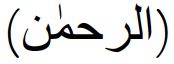 . This means that without any effort on the part of His creatures He provides everything that is necessary for their development and progress.
Thirdly, He is Rahim 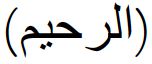 . This means that when those of His creatures that are endowed with will and intelligence voluntarily choose to do good and to resist evil, God bestows upon them the highest reward and that reward continues indefinitely.
Fourthly, He is Maliki Yaum-id-Din  . This means that the ultimate judgement concerning everything rests with Him. Everything owes its origin to Him and the end of everything is also in His hands. Man and other creatures may bring about temporary and ephemeral changes but have not the power to effect any permanent change in the universe. For instance, man has no power to create either matter or soul. He is equally without power to destroy either, though he may be able to effect temporary changes in matter and to give it different shapes. As the attribute of creation belongs to God alone the attribute of destruction also is peculiar to Him. Nothing can ultimately be destroyed till God decrees its destruction. This is an obvious truth and the Quran expresses it by stating that God is the Master of the time of judgement. That is to say, the final judgement regarding everything that is set in motion rests in His hands and these judgements are arrived at by Him in His capacity of Master of the universe and not merely as a judge who adjudicates upon the rights of the parties before him. A judge is bound to make an impartial adjudication upon the matter in dispute between the parties having regard to the rights and obligations of each. God is not so bound, for though when He pronounces His judgement no man is wronged or is cheated of his due, He is free to remit as much as He may choose out of what may be due to Himself. He does not insist upon the proverbial pound of flesh. As a master may treat his servants with mercy and act benevolently towards them and bestow favours upon them, so may God forgive the trespasses of His creatures and overlook their defaults and bestow His favours upon them. Failure to appreciate this attribute of God has led to the adoption by Christians of so untenable a doctrine as that of Atonement. The Christian doctrine is that God has, like a secular judge, no power to forgive any person his default. In making this erroneous assumption Christians overlook the fact that a judge is called upon to adjudicate between two parties and that he himself possesses no rights in respect of the subject-matter of the dispute. The relationship between God and His creatures is, however, very different from that between a judge and the parties to a dispute. God is both a claimant and the authority entitled to make the award. A judge is never himself a claimant. He is called upon merely to determine the rights of the parties before him. In other words, a judge has to arrive at a determination between two persons, one making a claim against the other. These persons may be both private individuals or one representing the State and the other a private individual. God determines between Himself and His creatures. He thus occupies dual position. He is both claimant and judge. As a claimant He is entitled to remit the whole or as much as He chooses of His claim. Such a remission would be mercy and not injustice, for the remission relates to God’s own claim and does not operate to deprive any person of his right. This is in perfect accord with reason.
On the other hand the doctrine of Atonement is wholly opposed to reason. If belief in the crucifixion of Jesus is indispensable for the remission of sins, then how did the Prophets who appeared before Jesus and their followers attain salvation? Was it not necessary for the crucifixion to have taken place at the inception of the universe so that all mankind should have attained salvation? Again, how is it that sins may be remitted through belief in the crucifixion but not through repentance, which is the natural means of purification of the heart. Belief in an external matter is not a natural means of purification of the heart, whereas remorse and contrition, which inflict a kind of death upon a man’s longings and desires and inspire him with a fresh determination to lead a virtuous life, are a natural and certain means of purification of the heart. It is surprising that Christians should believe that a sinner’s heart is purified by belief in the crucifixion of Jesus and that God in consequence forgives him his sins, but they should refuse to accept the truth that when a sinner experiences remorse and admits his fault before God and asks His forgiveness, God forgives him his sins and errors.
We observe that in the transaction of their daily affairs Christians themselves follow this principle. When a man commits a fault and is then overtaken by true remorse and, admitting his fault, promises to make amends, they forgive him. For instance, this principle is followed in their schools. When a schoolmaster finds that a pupil has been at fault or has been negligent concerning his studies or his other duties and the former is convinced that the pupil is contrite and is prepared to make amends for the future, he forgives him. Yet, if the doctrine of Atonement were sustainable, all that should be necessary in such a case should be for the pupil to say that though he has been at fault he is a believer in the crucifixion of Jesus and that his fault should be overlooked. But this is not what happens. The master insists that to be forgiven the pupil must show that he is ashamed of his default and is ready to make amends for the future. He is not prepared to forgive merely on the assurance that the pupil believes in the crucifixion.
It may, however, be alleged that belief in the crucifixion is tantamount to purification of the heart. This is, however, belied by the conduct of Christians all over the world. The evils and the vices that prevail in Christian countries can scarcely be matched in any other part of the world.
Then what is it that the Christians have gained through belief in the Atonement? If they assert that they will attain salvation through belief in this doctrine, this would be untenable, as we have already shown that salvation can only be attained through true repentance and that the Prophets who appeared before Jesus and their followers attained salvation only by this means. If Christians claim that the Atonement brings about purity of heart, this has not been achieved by Christians in spite of their belief in the Atonement. We do not mean to imply that no Christian enjoys purity of heart, but we do assert that the purity of no Christian’s heart is due to belief in the Atonement. If the heart of a Christian is purified it is purified like the hearts of other people, through remorse and repentance or through the worship of a God i.e, prayer and fasting as was said by Jesus himself: “This kind can come forth by nothing, but by prayer and fasting.”24
It is not possible to enter into a detailed explanation of the various attributes of God referred to in the Quran, either expressly or by inference, as stemming from the four principal attributes which have just been described. A brief mention of them may, however, be made here:
al-Malik i.e., The Sovereign.
al-Quddus i.e., The Holy One.
as-Salam i.e., The Source of Peace.
al-Mu’min i.e., The Bestower of Security.
al-Muhaymin i.e., The Protector.
al-‘Aziz i.e., The Mighty.
al-Jabbar i.e., The Subduer.
al-Mutakabbir i.e., The Exalted.
al-Khaliq i.e., The Creator.
al-Bari i.e., The Maker.
al-Musawwir i.e., The Fashioner.
al-Ghaffar i.e., The Great Forgiver.
al-Qahhar i.e., The Most Supreme.
al-Wahhab i.e., The Bestower.
ar-Razzaq i.e., The Great Sustainer.
al-Fattah i.e., The Opener (of the doors of success for mankind); The Judge.
al-‘Alim i.e., The All-Knowing.
al-Qabid i.e., The Controller; He Who keeps all things within limits; The Seizer.
al-Basit i.e., The Enlarger; He Who enlarges the means of subsistence.
al-Khafid i.e., The Depresser; He Who brings low the proud.
ar-Rafi‘ i.e., The Exalter.
al-Mu‘izz i.e., The Bestower of honour.
al-Mudhill i.e., The Abaser; He Who abases the haughty.
as-Sami‘ i.e., The All-Hearing.
al-Basir i.e., The All-Seeing.
al-Hakam i.e., The Wise Judge.
al-‘Adl i.e., The Just.
al-Latif i.e., The Incomprehensible; The Knower of all subtleties; The Benignant.
al-Khabir i.e., The All-Aware.
al-Halim i.e., The Forbearing.
a1-‘Azim. i.e., The Great.
al-Ghafur i.e., The Most Forgiving.
ash-Shakur i.e., The Most Appreciating.
al-‘Aliyy i.e., The High.
al-Kabir i.e., The Incomparably Great.
al-Hafiz i.e., The Guardian.
al-Muqit i.e., The Preserver; He Who preserves the faculties of all created things; The Powerful.
al-Hasib i.e., The Reckoner.
al-Jalil i.e., The Lord of Majesty.
al-Karim i.e., The Noble.
ar-Raqib i.e., The Watchful.
al-Mujib i.e., The Answerer of prayers.
al-Wasi‘ i.e., The Bountiful; The All-Embracing.
al-Hakim i.e., The Wise.
al-Wadud i.e., The Loving.
al-Majid i.e., The Lord of honour.
al-Ba‘ith i.e., The Raiser (of the dead).
ash-Shahid i.e., The Witness; The Observer.
al-Haqq i.e., The True.
al-Wakil i.e., The Disposer of affairs; The Keeper.
al-Qawiyy i.e., The Powerful.
al-Matin i.e., The Strong.
al-Waliyy i.e., The Friend.
al-Hamid i.e., The Praiseworthy.
al-Muhsi i.e., The Recorder.
al-Mubdi’ i.e., The Author (of life); The Beginuer.
al-Mu‘id i.e., The Repeater (of life).
al-Muhyi i.e., The Life-giver.
al-Mumit i.e., The Controller of the causes of death; The Destroyer.
al-Hayy i.e., The Living.
al-Qayyum i.e., The Self-Subsisting and All-Sustaining.
al-Wajid i.e., The Discoverer; The Finder.
al-Majid i.e., The Glorious.
al-Qadir i.e., The Possessor of power and authority.
al-Muqtadir i.e., The Omnipotent.
al-Muqaddim i.e., The Provider (of the means of progress and advancement).
al-Mu’akhkhir i.e., The Degrader; The Postponer.
al-Awwal i.e., The First.
al-Akhir i.e., The Last.
az-Zahir i.e., The Manifest; He to Whose existence every created thing clearly points.
al-Batin i.e., The Hidden; He through Whom the hidden reality of everything is revealed,
al-Waliyy i.e., The Ruler
al-Muta‘ali i.e., The Mast High: The Possessor of excellent attributes.
al-Barr i.e., The Beneficent.
at-Tawwab i.e., The Oft-Returning with compassion; The Acceptor of repentance.
al-Mun‘im i.e., The Bestower of favours.
al-Muntaqim i.e., The Awarder of appropriate punishment; The Avenger.
al-‘Afuww i.e., The Effacer of sins.
ar-Ra’uf i.e., The Compassionate.
Malik-ul-Mulk i.e., The Lord of Sovereignty.
al-Muqsit i.e., The Equitable.
al-Jami‘ i.e., The Gatherer; The Assembler.
al-Ghaniyy i.e., The Self-Sufficient.
al-Mughni i.e., The Provider of the means of sufficiency; The Enricher.
al-Mani‘ i.e., The Withholder, The Prohibitor.
ad-Darr i.e., The Inflictor of punishment.
an-Nafi‘ i.e., The Benefactor.
an-Nur i.e., The Light.
al-Hadi i.e., The Guide.
al-Badi‘ i.e., The Originator.
al-Baqi i.e., The Survivor.
al-Warith i.e., The Inheritor.
ar-Rashid i.e., The Director to the right way.
as-Sabur i.e., The Patient.
Dhul-‘Arsh i.e., The Lord of the Throne.
Dhul-Waqar i.e., The Possessor of staidness and gravity; He Who does everything with reason and to fulfil a certain purpose.
al-Mutakallim i.e., The Speaker; He Who speaks to His servants.
ash-Shafi i.e., The Healer.
al-Kafi i.e., The Sufficient.
al-Ahad i.e., The Unique; The Lord of Unity.
al-Wahid i.e., The One.
as-Samad i.e., The Besought of all; The Independent; The Everlasting.
Dhul-Jalali Wal-Ikram i.e., The Lord of Majesty and Bounty.
These attributes are either expressly mentioned in the Quran or are deducible from Quranic verses. A consideration of these attributes helps to visualize the plan of the spiritual universe which the Quran puts forward. They may be roughly divided into three categories:
First, those that are peculiar to God and are not related in any way to His creatures e.g. al-Hayy––The Living; al-Qadir––The Possessor of power and authority; al-Majid––The Glorious.
Secondly, those that are related to the creation of the universe and indicate the relationship between God and His creatures and His attitude towards them e.g. al-Khaliq––The Creator; al-Malik––The Sovereign, etc.
Thirdly, those that come into operation in consequence of the good or bad actions of such of God’s creatures as are endowed with will e.g. ar-Rahim–He rewards the voluntary good actions of man abundantly and repeatedly; Maliki Yaum-id-Din—The Master of the Day of Judgement; al-‘Afuww—He overlooks faults; ar-Ra’uf—He is Compassionate etc.
Some of these attributes appear to be repetitions but on consideration one finds fine distinctions between them. For instance, several of these attributes relate to creation as Khaliqu Kulli Shay’in, al-Badi’, al-Fatir, al-Khaliq, al-Mu‘id, al-Musawwir, ar-Rabb. At first sight they appear to overlap but in fact they signify different aspects.
Khaliqu Kulli Shay’in means that God has created all things and signifies that He is also the Creator of matter and of souls. Some people believe that God fashions but does not create. They do not, for instance, regard Him as the Creator of matter or of souls; they believe that matter and souls are self-existing and eternal like God Himself. If God had been described in the Quran merely as the Creator, these people could have claimed that they too believe in God as the Creator in the sense that He brings about the union of the body and the soul and thus fashions and in a sense creates man. This interpretation would have left the real meaning of the Quran in this respect in doubt. By describing God as the Creator of all things, the Quran has enlarged the scope of the attribute of creation, so as to include the creation of matter and souls.
Badi‘ signifies that God has planned and designed the system of the universe and this system is not, therefore, accidental or copied from somewhere else.
Fatir means One Who extracts something by breaking the shell. The attribute Fatir, therefore, indicates that God has created matter with inherent faculties of development and that in due season He breaks open the shell or covering which confines the operation of these faculties and brings them into operation. For instance, a seed possesses the faculty of growing into a plant or a tree but this faculty comes into operation only at a certain season and under certain conditions. When those conditions arise and that season arrives, the seed begins to develop its faculty of growth. This attribute thus indicates that God has created the universe in accordance with a set of laws and that all sections of the universe continue to develop in accordance with those laws. All the time certain parts of the universe go on traversing preparatory stages and their inherent faculties come into play at certain seasons and then new forms of life become perceptible.
The attribute of Khalq (creation) also signifies planning. Khaliq (Creator) therefore also means that God has arranged all things in their proper order and that the universe is controlled by a system.
Bari signifies that God starts different manifestations of creation and then appoints laws in obedience to which the thing created goes on repeating and multiplying its species. This is reinforced by the attribute Mu‘id, which signifies repetition.
Musawwir signifies that God has given each created thing a shape which is appropriate to its functions. This shows that the perfection of creation consists not merely in endowing the thing created with appropriate faculties but is achieved also by giving it appropriate shape.
Rabb signifies that God after creating goes on fostering the faculties of created things by stages and thus leads them to perfection.
All these attributes thus signify different aspects of creation. In the same way several other attributes which appear at first sight to be overlapping or mere repetitions are in fact intended to signify very fine distinctions. Once the significance of each attribute is clearly grasped, one is able to appreciate the beauty and the glory of the spiritual universe that the Quran describes.
The New Testament makes little mention of the attributes of God. Neither the Torah nor any other single Scripture describes all these attributes. If, however, all the Jewish Scriptures are taken together, one finds mention in them at different places of a good many of the attributes that we have set out above, but even then all are not mentioned. It is commonly thought by Muslims that God possesses ninety-nine attributes. This idea is related to certain Jewish traditions which are based upon the attributes of God mentioned in the Jewish Scriptures. The Quran makes mention of many more than the one hundred and three attributes we have mentioned above but those we have not set out. In fact many of the attributes of God, the operation of which is not connected with man, have not been mentioned in the Quran and it would therefore not be right to assign any particular number to the attributes of God.
Wherever in Islamic literature any mention of a number is made in this connection it is only in contrast to the Jewish claim and not for the purpose of expressing the absolute reality.
The Vedas mention very few attributes of God and the same is the case with the Zend-Avesta. The truth is that as the Quran is the perfect book and contains complete guidance for all stages of spiritual development, it sets out all the attributes of God the knowledge of which is necessary for man, including those that have been mentioned in previous Scriptures and those that have not been so mentioned.
It is sometimes alleged that some of these attributes are inconsistent with others. For instance, God is Merciful and yet He punishes. He is free from all needs and yet He creates and makes provision for the guidance of mankind which indicates a desire on His part to bring into existence man and other creatures. Such criticism often originates in minds that are not given to deep reflection. They do not realise that a large part of the real beauty of the universe is due to its diversity and that what they regard as conflict and inconsistency is evidence only of the richness of the pattern of the universe. Everything in the universe moves within its appointed sphere and may be regarded as a link in a huge chain.
It is true that God punishes, but this is done in accordance with His laws regulating punishments and penalties. When the operation of these laws demands the imposition of a penalty, God decrees punishment. As against this, God has promulgated laws through which His attributes of mercy and forgiveness find manifestation. When the operation of these laws necessitates the exercise of the attribute of mercy or of forgiveness, that attribute comes into operation. Thus at the same time His attribute of punishment manifests itself in accordance with His laws in respect of one person and His attribute of forgiveness or mercy or benevolence manifests itself in respect of another. One person is born in manifestation of God’s attribute of creation and at the same moment another person dies in manifestation of God’s attribute of destruction. The question is generally asked why God causes people to die when the Quran describes Him as Rabbul-‘Alamin, which means that God creates and fosters and leads to perfection. This question indicates lack of reflection on the part of the persons who put it. The Quran does not describe God as the Rabb of this world alone but as the Rabb of all the worlds. Death means translation from one universe to another. When a person is so translated, the attribute of Rabubiyyat (creation and fostering) makes itself manifest in respect of that person in the universe to which he is translated. Whatever exists in any universe is fostered under the attribute of Rabubiyyat. If we are, however, to suppose that something has ceased to exist, then it has ceased to be part of any universe and the question of the manifestation of the attribute of Rabbul-‘Alamin (Creator, Sustainer and Fosterer of all the worlds) in respect of that thing does not arise at all.
The Quran teaches that for the regulation and adjustment of the attributes which affect mankind God has set in motion two laws. The first of these is: “My mercy encompasses all things;”25 and the second is set out in the verse: “What has happened to you that you expect not wisdom and staidness from Allah.”26 The latter verse means that whatever God does is based upon wisdom. One of the attributes of God mentioned in the Quran is The Wise, which also indicates the same thing.
These two laws indicate that every manifestation of an attribute of God is for the achievement of a definite purpose or object. They also show that whenever there is a struggle between the laws demanding punishment and the laws necessitating the exercise of mercy, the latter will prevail and punishment will be subordinated to it. Contemplation of the operation of these two laws fills the heart of a Muslim with the love of God which pervades the whole of his being. A Muslim, for the purpose of creating love and devotion in his heart towards God, is not under the necessity of doing violence to his reason and of accepting the doctrine of Atonement and the crucifixion of a human being who bore the burden of all sins. It is enough for him that the Quran teaches that every manifestation of God’s attributes is governed by wisdom and has a definite purpose and object and that, being human, if he is on occasion guilty of a weakness or commits a fault and is then overtaken by remorse and contrition and makes up his mind to eschew all manner of error in the future, the love and forgiveness of God will completely cover him. This knowledge melts his heart and it is dissolved in an ecstasy of love for God. A Muslim realises that though God is the Creator and the Sovereign, He forgives the trespasses of His servants, overlooks their faults, and makes every manner of provision for their advancement. When He imposes a penalty, His object is not to inflict pain or to humiliate but to enable His erring servants to reform themselves and to march forward along the paths of progress. He realises that God is ever ready to accept true repentance and covers up the faults of His servants and through remorse and repentance wipes them out altogether. He finds that God, Who is the Lord of Majesty and Exaltation, hears the prayers of His servants and that His eagerness to draw near to His servants is many times greater than the eagerness of His servants to approach near to Him. Realising all this, his heart is filled with the love of God and he is driven towards Him in a paroxysm of love and devotion even greater than that which drives an infant to the arms of its mother; and God too inclines towards such a servant of His with love and tenderness many times greater than that of a mother who rushes to comfort her crying and distressed child.
The Quran teaches that God desired to bring into existence a universe which should serve as a manifestation of His Majesty and His Light and that this was the cause of the creation of the universe. It says that God created the heavens and the earth in six periods. Before that God ruled over water. God’s object in creating the heavens and the earth out of water was to bring into existence a being endowed with the will to choose between good and evil. These beings would pass through various trials and would seek to outstrip one another in doing good and thus show which of them had attained to perfection.27 This verse shows that before matter assumed its present form it existed in liquid shape, or, in other words, the creation of the material universe began with a pure atom of hydrogen and that the universe was gradually developed out of it. With regard to the pre-material stage the Quran says:
Do not the disbelievers see that the heavens and the earth were a closed up mass, then We opened them out? And We made from water every living thing. Will they not then believe?28
The verse purports to say that the heavens and the earth were at first an amorphous mass and God then split them and formed them into a solar system and from the beginning He has always created life out of water. The verse indicates that the spiritual universe would also develop as the material universe had developed. God, in accordance with the laws which He had set in motion, split the mass of matter, and its scattered bits became the units of the solar system. In the same way God brings about revolutions in the spiritual universe. When the spiritual condition of mankind degenerates and the spiritual atmosphere becomes dense and oppressive, God causes a light to appear which causes a disturbance in the darkness and shakes it up and out of this apparently lifeless mass a perpetually moving spiritual solar system is created which begins to reach out from its centre and eventually embraces whole countries or the whole earth, according to the impetus behind it. The creation of the material universe starts from water; so also the spiritual universe comes into life with heavenly water which is revelation.
According to the Quran the universe passed from stage to stage till the earth assumed a shape and developed properties which could sustain human life. The Quran teaches that the creation of man was the ultimate object of the creation of at least our solar system. When that stage arrived, God created man in the material universe so that he should become the manifestation of divine attributes and should serve as a mirror to reflect the beautiful image of God and should become the foundation of a spiritual universe. God’s creation comprises millions of species. The Quran says: “None knows the hosts of thy Lord but He.”29 Man, however, occupies a position of dignity and honour among created beings for the reason that he serves as a mirror for the attributes of God. That is why Muslim mystics have called man a microcosm, meaning that man possesses the attributes of the whole of creation and may be regarded as an epitome of the universe. As a survey map, though on a small scale, indicates all features of the country which it depicts, in the same way there are represented in the human body all the characteristics of the universe. Man is, therefore, the axis or centre of the created universe. The Quran says that the whole universe is created by God for the service of man and our observation confirms that man rules over the whole of creation and that no part of creation rules over him. He is no doubt affected by changes of climate, by the light of the planets and the stars, by thunder and lightning, by storms and blizzards, by epidemics and pestilences, but he is not in any way ruled by these phenomena. Those that rule are often affected by those over whom they rule and yet there is never any difficulty in determining who rules and who is ruled. Thus though man is affected by the other parts of creation, he nevertheless rules over them. He controls rivers, oceans, mountains, winds, thunder, rain, herbs and medicines and is manifestly the central point of creation or at least of that part of creation which is related to our universe. God’s creation is vast and there may be worlds in existence of which we have no knowledge. We cannot therefore speculate with regard to them.
The Quran, contrary to the accounts given in the Old and the New Testaments, teaches that man was created through a gradual process. We have adverted to this subject above and have cited Quranic authority for the proposition we have stated. There is another verse in the Quran which shows that the creation of man was the culmination of a gradual process and that it is not correct to say that God formed man out of clay and breathed His spirit into him. The Quran says: “And He has created you in different stages and different forms.”30 That is to say, God has created man by making him pass through stage after stage and condition after condition. According to the Quran, therefore, man was not created suddenly at one stroke but as the result of a gradual process. In the same way man’s intellectual development also proceeded gradually. The Quran shows that human beings were in existence before Adam but that they were not yet able to bear the responsibility of revealed Law. They lived in caves and in mountain fastnesses. It is for this reason that the Quran has called them by the name of Jinn, which means literally those that dwell out of sight. Some people have applied this word to the genii of tales and fables, but the Quran does not support this interpretation. It expressly states that when Adam and his people went out of the garden (which again, according to the Quran, was a region of the earth and is not to be confused with Paradise) God warned them against Iblis “who was one of the Jinn” and told them to be careful of him and his people as they would all have to live together upon the earth wherein they would spend their spans of existence and wherein they would die.31 Again, addressing Adam and his people and Iblis and his people God admonishes all of them to accept His Prophets when they should appear among them from time to time.32 All this shows that the Jinn of the time of Adam and their leader Iblis were of the human race. The genii of the fables do not live in company with men nor are they in any other way connected with men. The Quran does not lend any support to the idea of the Jinn of the fables. Those whom the Quran describes as Jinn in connection with Adam were human beings who dwelt upon the earth but whose mental faculties were not yet fully developed. When the stage of the full development of the mental faculties of man was reached, God sent His revelation to the most perfect man of that generation, namely, Adam. This revelation was confined to a few social rules relating to the formation of a society and the provision of food and other means of maintenance for it. Those whose social sense was not yet fully developed refused to submit themselves to Adam. God punished them and gave Adam victory over them. For the future God decreed that Prophets would continue to appear and those who believed in them would identify themselves with Adam and his people and those who rejected them would identify themselves with the Jinn who had opposed Adam. Each Prophet is raised to help forward the intellectual and spiritual evolution of man. Those, who are opposed to the next stage of evolution and are not willing to submit to the limitations and regulations which God seeks to impose through His Prophet to help forward the process of evolution, reject the Prophet.
In short, the Quran teaches that man’s physical creation and development are the result of a process of evolution and in the same way his intellectual development is also the result of a process of evolution. Adam was not the first human being but was the first human being whose intellect was capable of accepting and bearing the responsibility of revelation. The Quran nowhere states that God desired to create man and therefore created Adam. The Quran expressly states that God decided to appoint a “Vicegerent upon earth” and appointed Adam. This shows that at the time of the appointment of Adam as God’s Vicegerent on earth there were human beings dwelling upon the earth but none of them had become the recipient of divine revelation since their mental faculties were not yet fully developed. When the development of human intellect arrived at the stage where man became capable of forming a society and living in accordance with an organized system, God sent His revelation to Adam, who possessed the most highly developed intellect in his own age, and he thus became the first Prophet. He was not the first man but the first Prophet, and the revelation received by him comprised a few clear and simple social laws and a simple explanation of some of the divine attributes.
At another place the Quran says: “And We did create you and then We gave you shape then said We to the angels, 'submit to Adam'.”33 The verse means that God created man and then gave shape to his faculties and then commanded the angels to bow down to Adam. This verse also clearly shows that man had been in existence prior to the time of Adam. The development of man’s intellectual faculties indicates that before the appearance of Adam man had already passed through several stages of evolution. The verse indicates that after man was created his faculties developed from stage to stage and assumed different shapes and he began to be distinguished from the other animal creation around him and when his intellect was developed to a certain degree, Adam was created and God sent His revelation to him.
The Quran teaches that man has been created to serve as a manifestation of God’s attributes and to illustrate them in his life. It says, “And I have created the Jinn and men only that they may serve Me and receive the impress of My attributes.”34 (As has already been explained the word Jinn does not mean some species of invisible creation but is intended to signify certain classes of people). At another place the Quran says, “He it is Who made you vicegerents in the earth. So he who disbelieves, will himself suffer the consequences of his disbelief.”35 This means that if a man voluntarily abdicates the position that God has assigned to him, he does not thereby in any manner injure God but merely dislodges himself from a position of honour and will suffer the consequences himself. These verses show that man has been created to illustrate in his own life the attributes of God and that he is the vicegerent of God upon earth. He is, thus, the central point of the material universe. Since Prophets are raised for the reform of mankind and to remind them of the object of their life and to guide them rightly towards its achievement, they become in their spheres the centres for mankind. In other words, man is the sun round which the material universe revolves and each of the Prophets is a sun round which the men, for whose guidance that Prophet is sent, revolve.
The Quran shows that God has put into motion two kinds of laws for the purpose of reminding man of his duties and of helping him along the path of progress. One of these is the law of nature which is related to man’s material progress. Since this law is not directly related to man’s spiritual advancement, a contravention of this law results in material prejudice to man but does not involve God’s displeasure or anger. The whole of the material universe is invested with the appropriate impetus of this law and is impelled by it. No direct revelation is made by God concerning the details of this law.
The second is the Law of Shariah which regulates man’s spiritual progress. A contravention of this law involves divine displeasure, for it is only by conformity to this law that man can succeed in fulfilling the purpose for which he has been created and contravention of this law arrests his progress towards that objective. But every contravention of the Law of Shariah has not the effect of depriving a man altogether of his chances of achieving his objective. The Quran teaches that the Law of Shariah collectively helps a man to attain spiritual purity and exaltation. Just as every contravention of the law of nature does not involve a man in complete ruin and destruction nor does every carelessness in the matter of diet induce disease, in the same way not every contravention of the Law of Shariah draws upon man the wrath of God or deprives him of all chance of reaching his goal. The very object of the Law of Shariah is to help man to attain spiritual perfection. Where an extensive system is designed to bring about a certain result, its failure in one respect may be corrected or compensated for by its success in another and the desired result may yet be achieved. The human body, for instance, is a complex organization and human life depends for its healthy continuance upon various factors like food, water, air, etc. On occasion one or more of these factors become tainted but this does not necessarily result in the organism becoming diseased. The defect produced by deficiency in one factor may be overpowered by the healthy working of the other factors. The same is the case with the Law of Shariah. It comprises rules and principles which are collectively designed for the spiritual advancement of man. Short of the repudiation of the Kingdom of God or of the authority of His Prophets any defect that may be produced in human conduct by an error or weakness is remediable. If the defect is serious, it can be remedied only through true repentance and sincere prayer.
The Quran indicates that in addition to these two laws there are two other laws which are constantly in operation, namely, the social law and the moral law. But these are in reality the extensions of the boundaries of the law of nature and the Law of Shariah. The moral law is the extension of the Law of Shariah and the social law is the extension of the law of nature and they act and re-act upon each other to a large degree. Many rules of social law are based upon morality and many rules of moral law are based upon sociology. Since man has been intended to live as a member of society, he is in need of both these sets of laws. The social law being a continuation, as it were, of the law of nature, man has been permitted a very large choice in the framing of it. The moral law being related to the Law of Shariah, its fundamentals are governed by that law, though some of its details are left to man’s choice. The whole system of the universe runs on the basis of these laws. The law of nature and the Law of Shariah are both appointed by God and man has no share in framing them. The social law and the moral law, however, are a combination of divine commandments and human regulations, and in this manner by associating human cooperation with the divine design the very best guidance is furnished for the running of the universe. So long as these two streams continue to run in parallel channels, the world goes on progressing in peace and man is able to set up a beneficent system upon the earth which is in accord with the Kindgom of God, but when these two streams begin to run in opposite directions, or in other words, when human reason is diverted from the course which runs parallel to divine guidance and is thus deprived of divine blessing, the world becomes a prey to conflict and discord. It is then ruled neither by God nor by man but becomes subject to the sway of satanic forces; for man can claim to be human only so long as he follows divine guidance. When he ceases to do that, he descends to the level of the brutes.
To enable man to attain nearness to God it was necessary to leave him free to choose his course of action. The Quran teaches that man is free in one sphere and is subject to compulsion in another. He is free in the matter of the Law of Shariah and has no choice where the operation of the law of nature is concerned. He is subject to compulsion in this last sphere for the reason that his spiritual progress is not directly related to the operation of the law of nature. He has been given free choice of action in the sphere of the Law of Shariah inasmuch as he can become the object of divine favour and bounty only by acting upon the Law of Shariah and no reward can be earned unless there is free choice in the matter of action. What a man is under compulsion to do can earn him no reward.
The Quran recognizes that man’s spiritual welfare and progress is affected by his material surroundings and to the extent to which it is so affected limitations are placed upon his actions, but it also teaches that man’s actions are appraised by God with reference to his background and environment. For instance, if a millionaire spends a small fraction of his wealth in the service of humanity and a poor man possessing only the equivalent of that small fraction spends the whole of it in the service of his fellow-beings, they will not, in the eyes of God, be entitled to an equal reward. The millionaire devoted a thousandth or a hundred-thousandth part of his wealth to the winning of the pleasure of God and the poor man gave his all for that purpose. The reward earned by each will be in proportion to the sacrifice made by each. God looks not to the volume of a man’s actions but appraises them against their true background. He does not overlook the handicaps to which a man is subject and which limit the scope of his actions nor the conveniences which a man enjoys and which facilitate his actions.
We learn from the Quran that as the material universe has developed gradually, a similar gradual process of development was prescribed for the spiritual universe. That is why the perfect code of laws was not revealed at the inception of the universe. Revelation was sent down to man in consonance with the stage of development reached by him. Eventually man arrived at a stage when he could bear the responsibility of the perfect Law of Shariah. God in His wisdom then caused to appear the most perfect human being in the person of the Holy Prophet of Islam and revealed to him the perfect Law of Shariah and the perfect Scripture. That perfect Law is Islam and that perfect Scripture is the Quran. The evolution of the spiritual universe was completed in the person of the Holy Prophet. As man is the central point of the material universe and the respective Prophets were the central points of the nations to which and the ages for which they were sent, the Holy Prophet of Islam is the central point for the whole of mankind. The plan of the universe, therefore, put forward by the Quran is that the first central point of the universe is man. In their different spheres mankind revolve around their respective Prophets, the Prophets revolve around the Holy Prophet of Islam and he, in turn, revolves round and leads the whole universe to God and the spiritual universe is, thus, carried to its perfection.
It has already been stated that God has through His Prophets provided for the progress and perfection of man by means of the Law of Shariah, the moral law and the social law. Since the Quran is the most perfect Scripture, it deals with all these three laws. It sets out the Law of Shariah and the moral law in full and states the fundamental principles of the social law leaving the rest of the field of social law to be developed and filled in by man himself. In the sphere of the moral law the Quran lays down this fundamental principle that it is the appropriate use of the natural faculties which constitutes high moral qualities. The suppression or stultification of natural faculties or desires is as much a moral offence as is complete submission to their domination. He who seeks to kill his natural faculties or completely to suppress his natural desires sets at defiance the law of nature. He whose mind is filled with, and whose energies are devoted to, the fulfilment of his natural desires sets the Law of Shariah at defiance and is heading towards spiritual destruction. Both courses are fatal to man’s development. Neither the law of nature nor the Law of Shariah can be defied with impunity. That is why the Quran teaches that since all things are created for the service and benefit of man, their use is permissible to him save that he is restrained from putting them to uses which are definitely harmful. According to this principle, celibacy is viewed by Islam not as a virtue but as a vice. In the same way abstention from the use of clean articles of food, drink and dress is not a virtue but a vice, inasmuch as restrictions like this amount to a defiance of the law of nature and ingratitude in respect of divine bounties. It is equally a vice, however, to spend one’s time wholly in the pursuit of these objects and to devote oneself completely to their enjoyment, for in this way a man neglects the development of his soul, which is the real object of human existence. As it is sinful for a man to go on working incessantly and to abstain from all nourishment—for thereby he will bring about his own death and will leave his work unfinished—in the same way it is sinful for a man to devote himself entirely to the fulfilment of his physical desires and to abstain from useful activities, for such a man spends his life in the pursuit of the means and neglects the end. No end can be achieved without the provision of means and appropriate means cannot be created without keeping the true end in view.
To establish order in the social sphere and to give it a beneficent direction the Quran has laid down the following principles:
1) Absolute ownership vests in God alone and all things belong to Him.
2) He has subjected everything to the control of man for the collective benefit of the whole of mankind.
3) Since the object of man’s existence is spiritual perfection, he must be given a certain amount of freedom of choice in his actions and must be provided with a field for his activities.
4) Since the materials upon which human progress is based are the common heritage of the whole of mankind, the produce of human labour must be so distributed as to secure their proper share both to the individual and to the community.
5) For the proper regulation of the human social system some person must be entrusted with executive authority who must be elected as the result of consultation among the members of the community over whom he is to exercise authority. His function is not to frame laws but to enforce divine laws.
6) Keeping in view the possibility of diversity in the political systems of different communities the Quran teaches that:
a) In case of a dispute arising between any two or more political States the others should combine to bring about a settlement of the dispute.
b) If an amicable settlement is not arrived at between the parties to the dispute, the remaining States should pronounce an equitable award with reference to the matter which is the subject-matter of the dispute.
c) If either of the parties to the dispute refuses to accept the award or, having accepted it, fails to give effect to it, the remaining States should combine to persuade the recalcitrant State to accept the award in the interests of international peace. If persuasion fails, they should compel the Government concerned by force to submit to the award.
d) When the obdurate State has made its submission, the other Governments should refrain from going beyond the enforcement of the award relating to the original dispute and should not seek to secure any advantages for themselves, for this would lay the foundation of fresh disputes.
All this was prescribed by the Quran more than thirteen and a half centuries ago. The United Nations Organization has adopted some of these principles but is in danger of failing in its purpose for neglecting others. The League of Nations failed for the reason that it did not give effect to the Quranic principle that an intransigent Government should be compelled by force to submit to an international decision or award. The United Nations Organization does not appear to be anxious to secure that the powers that enforce a settlement should not seek any advantage for themselves at the expense of the vanquished nations and should confine their efforts to the enforcement of the settlement of the dispute which gave rise to the conflict. It is feared, therefore, that the United Nations Organization will experience the same fate which overtook the League of Nations; for peace can only be established and maintained on the principles laid down in the Quran.
The Quran teaches that on a man’s death his soul enters a new universe and assumes a new body. That body is different from the physical body that is adjusted to the requirements of this life. It is a new kind of spiritual body possessing peculiar faculties for the perception of God’s beautiful attributes. Perfect souls will be admitted immediately to the state described as Paradise. Those imperfectly developed in this life will encounter the state described as Hell which is a state of healing for spiritual ills. As the process of healing is completed in respect of each soul, it will attain Paradise; till eventually all souls will have attained Paradise and the state of Hell will be altogether terminated. All, having proceeded from God, will eventually revert to Him. Their joys, their pleasures and their comforts will all be spiritual. The remembrance and the love of God will be their nourishment and the vision of God will be their highest reward. The Quran invites attention to this by saying that the extremities of this universe are in the hands of God.36 This means that the universe originated with God and will also terminate with Him. That which has proceeded from God will revert to God, as Jesus said: “And no man hath ascended up to heaven, but he that came down from heaven.”37
The Quran expounds the principle that, as the perfect code of spiritual laws has been revealed through the Holy Prophet of Islam, no Law-bearing Prophet shall appear after him. The Quran is the last revealed Scripture and is not liable to be superseded either wholly or in part by any subsequent revelation. The spiritual universe will continue to be ruled by the Quran and the Holy Prophet till the end of days. But man is liable to forget, is apt to fall into error and is prone to rebel. To maintain the dominion of the Quran it was necessary to provide a remedy for all these ills. Provision was necessary that the forgetful may be reminded, the erring set right and the rebellious brought to submission. We learn from the Quran that as in the material universe the moon obtains light from the sun and illumines the earth when the light of the sun is not directly available, in the same way men will continue to appear who will obtain spiritual light from the Holy Prophet and will continue to illumine the spiritual universe. These men, in accordance with the degree of the need which they are designed to fulfil, will appear in the shape of Reformers, but in the case of widespread disorder and mischief in the spiritual realm would be appointed as Prophets subordinate, and in strict obedience, to the Holy Prophet. The Quran indicates at various places the appearance of one such Prophet who would be the spiritual image of the Holy Prophet and whose advent would be regarded as the advent of the Holy Prophet himself. In the Traditions this image of the Holy Prophet has been given the name of Messiah and the Quran also at one place indicates the applicability of this name to him.38
Another name mentioned in the Traditions for this Prophet is Mahdi. Both these names, however, are applicable to the same individual, though they express different capacities. The Gospels also refer to this second advent of the Holy Prophet by holding out the promise of the second advent of Jesus. The signs mentioned in the oldest Scriptures and in the Quran which should indicate the time of the advent of this Prophet have been fulfilled in this age and it is a mighty proof of the truth of the Quran that, in accordance with the prophecies made in it, a man was raised by God in this age who claimed to be the spiritual image of the Holy Prophet and in whose advent the prophecies contained in the Quran and other Scriptures were fulfilled. He explained that God had raised him for the purpose of re-establishing the dominion of Islam and to shed light upon the true teachings of the Quran. This claimant was the late Hazrat Mirza Ghulam Ahmad, Founder of the Ahmadiyya Movement. Nearly sixty years ago he was informed through divine revelation that he had been appointed to serve Islam and the Holy Prophet and to work for the exaltation of God’s name in the universe. He was told that God had conferred upon him the dignity of prophethood with this proviso that he would continue to be a perfect follower of the Holy Prophet and of the Quran and that the revelation which was vouchsafed to him would be subordinate to the Quran and would contain no new Law. One of his revelations was, “Every blessing is from Muhammad and blessed is he who has taught,” i.e. the Holy Prophet, “and blessed is he who has learnt,” i.e. Ahmad, who was the recipient of this revelation.39 Again, he received a revelation: “A Warner has appeared in the world but the world did not accept him. God will, however, accept him and will establish his truth through mighty convulsions.”40 In the terminology of the Quran a warner means a Prophet and in one version of this revelation received by the Founder of the Ahmadiyya Movement the word used in place of “Warner” was Prophet.41 His function was to bring man face to face with his Maker in this age of darkness and sow the seed of spiritual advancement in this material world through fresh Signs and revelations. When he first announced his claim he was alone and had no companion. He appeared in a small village of about one thousand four hundred or one thousand five hundred inhabitants which possessed no modern facility in the shape of a post-office, telegraph office or railway station. He announced then that God would establish his truth through mighty Signs and that his name would be carried to the farthest ends of the earth. In addition to the announcement that the Movement founded by him would be firmly established and would flourish and expand and that his followers would attain nearness to God, he further announced that within nine years of the date of the announcement a son would be born to him through whom many of his prophecies would be fulfilled and whose name would be carried to the ends of the earth. He would rapidly advance from success to success and would be blessed with the Holy Spirit. When Ahmad published his claims and the revelations received by him, he encountered a severe storm of opposition from all quarters and all communities. Hindus, Muslims, Sikhs and Christians all combined in opposition to him and resolved to compass his ruin. This opposition was in itself an indication that the Founder of the Ahmadiyya Movement was divinely inspired, for such universal opposition is normally encountered only by true Prophets. In spite of the fact that he was alone and was opposed by all communities, God began to strengthen his voice and by ones and twos people began to believe in him. Gradually his followers spread in the Punjab and then through the other provinces of India and even outside.
When the Founder of the Ahmadiyya Movement died in 1908, his opponents declared that the Movement would die a natural death. The Ahmadiyya Community, however, combined, in accordance with Islamic principles, to elect the late Maulawi Noor-ud-Deen as the First Khalifah. During the First Khilafat some members of the Community who had been affected by Western ideas began to be critical of the institution of Khilafat. Their views found some support among a certain section of the Community with the result that when Maulawi Noor-ud-Deen died in 1914, a vigorous and concerted effort was made by this section to abolish the institution of Khilafat altogether. I, who am the son of Ahmad, the Promised Messiah and Founder of the Ahmadiyya Movement, was then only twenty-five years of age and was utterly devoid of all material resources. The executive organization of the Community was dominated by the section who had revolted against the institution of Khilafat. A very large majority of those members of the Community who were then present at Qadian and who were described as a mob by those who were in revolt against the Khilafat were determined that they would maintain the institution in accordance with the principles laid down in the Quran and they insisted that I should take upon myself the burdens and responsibilities of the office of Khalifah. In these circumstances I agreed to accept the allegiance of the Community as the Second Khalifah and in that capacity began to serve the Community, Islam and humanity. Since the majority of those who were regarded as holding leading positions in the Community were opposed to the institution of Khilafat, the Community was faced with a crisis. Outsiders began to speculate that the dissolution of the Community and its disintegration was a matter of only a few days. At that time God revealed to me that he would succour me and give me victory and create dissension among the ranks of my powerful opponents and would break them. A great miracle then came to pass. The majority of those who were regarded as the educated and experienced section of the Community deserted it in the hour of its trial. Those who were regarded as men of substance and influence withdrew from it. Those who were looked upon as the intellect of the Community were cut off from it. Those who had revolted from the Khilafat began to proclaim that since the direction of the affairs of the Community had been committed into the hands of an inexperienced youth, the Movement would soon disintegrate. But the decrees of Him, Who had revealed the Quran and Who is the Author of the spiritual universe in accordance with the laws of which the world is progressing and Who had revealed to Ahmad, the Promised Messiah and Mahdi, that within nine years from 1884 he would be blessed with a son who would, under the Grace and Mercy of God, be known unto the ends of the earth and who would through the propagation of Islam become the instrument of the release of those held in bondage and of bringing into life those that were spiritually dead, were fulfilled and His word was exalted. Every day that dawned brought with it fresh factors that contributed to my success and every day that departed left behind elements that hastened the failure of my opponents. God thus made me the instrument of the spread of the Ahmadiyya Movement in all parts of the earth. At each step He has blessed me with His guidance and on numerous occasions He has honoured me with His revelation. Then the day arrived when He revealed to me that I was the Promised Son, the tidings of whose advent had been proclaimed by the Promised Messiah in 1884, five years before my birth. From that day the volume of God’s support and succour began to swell even faster and today Ahmadiyya Missionaries are fighting the battles of Islam in every continent. The Quran, which had become like a closed book in the hands of the Muslims, has again been made an open book for us by God through the blessings of the Holy Prophet and the instrumentality of the Promised Messiah. Fresh sources of knowledge are revealed to us through it. Whenever any teaching or doctrine contained in the Quran is made the target of criticism on the basis of some new scientific development, God reveals to me the true answer contained in the Quran. We have been chosen as the instrument for elevating the banner of the dominion of the Quran. Deriving faith and certainty from the words and the revelations of God we are demonstrating the superiority of the Quran to the world. Compared with the resources of the world our resources are pitiful. Yet we are assured that in spite of the severest opposition, the dominion of the Quran will be firmly established. The sun may move out of its course, the stars may leave their appointed places, the earth may stop in its revolution, but nothing and nobody can now obstruct the victory of Islam and the Holy Prophet. The dominion of the Quran will be established once more. Men will turn away from the worship of other men and of gods which they have fashioned with their own hands and will bow down in worship to the One God. In spite of the fact that the trend of human society appears to be in directions opposed to the teachings of the Quran, the Kingdom of Islam will be established again and so firmly that men will find it impossible to shake its foundations. God has sown a beneficent seed in the wilderness of the world that has been laid waste by Satan, and I proclaim that this seed will germinate and shoot up in the form of a tree which will spread and bring forth abundant fruit. The souls that aspire to soar high and are animated by longing to be united with God shall one day be roused and weaned from dreams of material prosperity and will be inspired with a passion to alight on the branches of this tree. All disorder shall then disappear and all travail shall be brought to an end. God’s Kingdom shall be re-established on earth and God’s love shall again become man’s most valuable treasure. This revolution shall usher in an era of peace and order. All efforts to bring peace to the world and to remove disorder which are at variance with these principles shall be brought to nought.
The Quran directed the Prophet to carry on his greatest struggle with the help of the Quran, which was the most effective weapon for this purpose.42 It is in pursuance of this direction of the Quran that this volume of the English Translation is being published. It is expected that the publication of the remaining portion of the English Translation will not be long delayed. Besides the English Translation, translations in the following seven European languages have been completed and will be published as soon as post-war restrictions permit: Russian, German, Dutch, French, Italian, Portuguese and Spanish. Thereafter it is hoped that this series will be continued till it comprises translations into all the principal languages. A translation into Swahili is already under preparation.
Missions of the Ahmadiyya Movement have been established in various parts of the world for the purpose of the propagation of Islam and the exposition of the teachings of the Quran. There is a central Mission in England and Missions are also working in France, Spain, Italy and Switzerland. On the American continent, there are Missions in U.S.A. and the Argentine and plans are being pushed forward for opening Missions in Canada and Brazil. Missions have been established in all the countries of British West Africa and ten Missionaries are working in different parts of British East Africa. Missionary activities are also being carried on in Egypt, Sudan and Abyssinia. There are Missions in Palestine, Syria and Iran in the Middle East, and in Malaya, Java, Sumatra and Borneo in South East Asia. We believe that these translations and Missions will inaugurate a successful campaign for the triumph of Islam, for not only are our efforts directed towards carrying into effect that which has already been decreed by God, but have been undertaken in obedience to God’s command.
In addition to offering this intellectual gift we invite the attention of all lovers of truth, to whatever religion they might profess allegiance, to the golden principle that a tree is known by its fruit. The Quran yields its fruits in every age and those who are devoted to it become the recipients of divine revelation and God manifests His powers through them. Why should we not, in our search for the truth, seek assistance not only from reason and reflection but also from our observation of the fruits that other Scriptures yield? The world would be materially assisted in its search for truth if Christians could persuade the Pope or other high Church dignitaries to put forward the revelations received by them as against those received by me for the purpose of determining which of them are true manifestations of God’s power and knowledge. The Pope and other ecclesiastics whose predecessors, in defiance of the pacific teachings of Jesus, were ever eager to incite Christendom to undertake Crusades against Muslim States, should be only too eager to embrace the opportunity of participating in this spiritual crusade. If they were inclined to accept, or could be persuaded by their followers to accept, this invitation, it might prove an effective means for healing the spiritual ills from which mankind has so long suffered. The Majesty and Power of God would then manifest itself in an extraordinary manner and would help to establish the faith of man and guide his spiritual development.
1 John 1:1
2 Holy Quran, 23:100, 101
3 Holy Quran, 21:96, 97
4 Holy Quran, 16:21, 22
5 Holy Quran, 71:14
6 Holy Quran, 17:60
7 Holy Quran, 9:40
8 Tarikh-ut-Tabari; Zarqani
9 Sahih-ul-Bukhari
10 Holy Quran, 4:59
11 Holy Quran, 47:5
12 Holy Quran, 24:34
13 Bukhari
14 Holy Quran, 17:86
15 Holy Quran, 23:13-15
16 Holy Quran, 42:12
17 Holy Quran, 51:50
18 Holy Quran, 57:4
19 Holy Quran, 6:102, 103
20 Holy Quran, 2:256
21 Holy Quran, 10:62
22 Holy Quran, 6:104
23 Holy Quran, 2:110
24 Mark 9:29
25 Holy Quran, 7:157
26 Holy Quran, 71:14
27 Holy Quran, 11:8
28 Holy Quran, 21:31
29 Holy Quran, 74:32
30 Holy Quran, 71:15
31 Holy Quran, 7:26, 28
32 Holy Quran, 2:39
33 Holy Quran, 7:12
34 Holy Quran, 51:57
35 Holy Quran, 35:40
36 Holy Quran, 79:45
37 John, 3:13
38 Holy Quran, 43:58
39 Haqiqatul-Wahi, Mirza Ghulam Ahmad (peace be upon him)
40 Barahin-e-Ahmadiyya, Mirza Ghulam Ahmad (peace be upon him)
41 Aik Ghalati Ka Izalah, Mirza Ghulam Ahmad (peace be upon him)
42 Holy Quran, 25:53