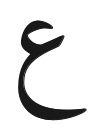
 and here with an R, refers to the grouping of verses in a distinct passage. The referenced verse(s) will be found within the given Ruku‘ number.
Please note that, in the translation that follows, words given in parentheses ( ) are the words of the original debaters who penned the papers. If any explanatory words or phrases are added by the translators for the purpose of clarification, they are put in square brackets [ ]. Footnotes given by the publisher are marked ‘[Publisher]’.
This book contains certified writings from both Muslims and Christians with Hazrat Mirza Ghulam Ahmad of Qadian representing the former, and Deputy Abdullah Atham, pensioner, representing the latter. To ensure that readers can easily distinguish between the two we have inserted grey sidebars alongside the latter.
As would be expected in a debate scenario, the papers involve complex iterations of back-and-forth rebuttals between the debaters. To facilitate readability and to clarify the certitude of references cited by the debaters, we distinguished formal direct quotes by employing either block quotes or quotation marks [‘ ’], whereas the more casual conversational paraphrasing was distinguished using italics.
References to the Holy Quran contain the name of the Surah [i.e. chapter] followed by a chapter: verse citation, e.g. Surah al-Jumu‘ah, 62:4, and count Bismillahir-Rahmanir-Rahim (‘In the name of Allah, the Gracious, the Merciful’) as the first verse in every chapter that begins with it. All references taken from the Bible are from the King James Version (KJV).
The following abbreviations have been used:
sa — sallallahu ‘alaihi wa sallam, meaning ‘may peace and blessings of Allah be upon him’, is written after the name of the Holy Prophet Muhammad(sa).
as — ‘alaihis-salam, meaning ‘may peace be on him’, is written after the names of Prophets other than the Holy Prophet Muhammad(sa) and select other holy personages.
aba — ayyadahullahu Ta‘ala binasrihil-‘Aziz, meaning ‘may Allah the Almighty help him with His powerful support’, is written after the name of the presenthead of the Ahmadiyya Muslim Community, Hazrat Mirza Masroor Ahmad(aba), Khalifatul Masih V.
Readers are urged to recite the full salutations when reading the book. The term Ruku‘ indicated in the Holy Quran with an and here with an R, refers to the grouping of verses in a distinct passage. The referenced verse(s) will be found within the given Ruku‘ number.
In general, we have adopted the system established by the Royal Asiatic Society for our transliteration.
We have not transliterated some Arabic words which have become part of English language, e.g. Islam, Quran, hadith, Mahdi, jihad, Ramadan and ummah. The Royal Asiatic Society’s rules of transliteration for names of persons, places, and other terms, are not followed throughout the book as many of the names contain non-Arabic characters and carry a local transliteration and pronunciation style.