Wife’s Rights Regarding Haq Mehr
Addressing ladies at Jalsa Salana Germany 2011 Huzoore Anwer (may Allah be his Helper) said:
“Demands are made for dowry etc. to be returned and at times lies are told. Young men are made to agree to large sums as 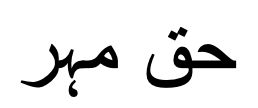 (haq mehr) on the pretext that it will never be demanded or girls say that they have forfeited
 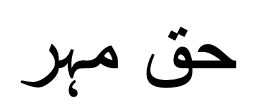 (haq mehr). It is also disingenuous if girls say they do not want it, because
 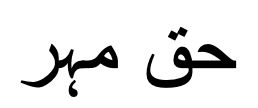 (haq mehr) is only fixed so that the woman takes it as it is her right; indeed, she should take it.
“Once a companion of the Promised Messiah (on whom be peace) said that his wife had returned her 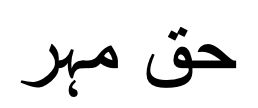 (haq mehr), and had surrendered it. The Promised Messiah (on whom be peace) told him to first go and put the amount of
 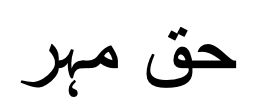 (haq mehr) in the palm of his wife’s hand and if she still returns it, then it would be considered as surrendered and he would be exempt from paying it, otherwise not! The poor person had two wives, he took out a loan and placed equal amounts of
 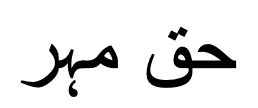 (haq mehr) in the palms of his wives’ hands and asked them to return it as they had surrendered it. The wives said they had surrendered it because they thought he did not have the capacity to pay and he would not pay it. However, now that he had given it to them, they asked him to clear off! The companion came to the Promised Messiah (on whom be peace) who laughed a lot and said it was good, this is how it should have been!”
(Friday sermon, 24 July 1925. Khutbaat e Mahmood, Vol. 9, p. 217, Rabwah edition).
Huzoore Anwer (may Allah be his Helper) said as regards the significance of haq mehr:
“Thus 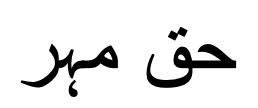 (haq mehr) is to be received and is not to be surrendered and it is a woman’s right to take it. Those who want to surrender it should first ask for it to be placed in the palm of their hands. If they have the generosity and the resolve to return it after this, they may do so.
“In instances where extortionate amounts of 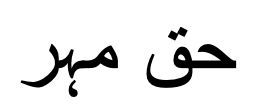 (haq mehr) is agreed upon and
 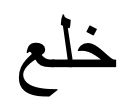 (khula) and divorce verdicts are passed, the Qadha Board has the authority to fix its own rate of
 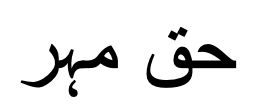 (haq mehr), as indeed it does, for someone who cannot afford to pay unwarranted amount of
 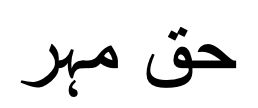 (haq mehr). Then there are those, both men and women, who go to the courts to get their rights and later maintain that it was their right by Shariah. Then they also come to the Jama’at! If they had a right through Shariah, then they should either opt for that or take the legal right! Sometimes the legal right is more than the Shariah right. In any case only one type of right should be claimed and injustice should not be perpetrated. One party should not be treated unfairly, neither the man nor the woman. Lies are also told in these matters. These are disgusting actions which provoke nothing but disgust in any decent person.”
(Address delivered to ladies on 25 June 2011 at Jalsa Salana Germany. Published in Al Fazl International 13 April 2012)
Huzoore Anwer (may Allah be his Helper) said the following as regards payment of haq mehr in instance of divorce:
“In marital conflicts… the husband says that he would neither leave or divorce the wife nor live with her. If the matter is brought to the Qadha Board or the courts it is dragged on without reason by using pretexts which make the matter long drawn. As I have mentioned many times some men do not divorce the wife in order to compel her to take 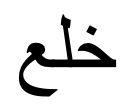 (khula) so that the man does not have to pay
 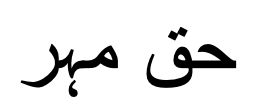 (haq mehr). All this distances one from righteousness. Allah the Exalted says reform yourself! If you seek mercy and forgiveness of Allah the Exalted for yourself, then show mercy yourself and give your wife her rights and give her a family life. If you wish to partake of the wide-ranging mercy of Allah the Exalted, then widen your mercy as well!”
Huzoore Anwer added: “I just explained about divorce and how some men make the process long-drawn and try and drag it on and on. When marriage takes place and husband and wife live together for a while and sometimes they also have children but it ends up in divorce. Here, the rights that the husband is obligated to fulfil are clear, including paying child maintenance and, 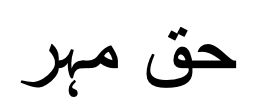 (haq mehr) etc. However, Allah the Exalted states the rights of the wife should be honoured even in situations when sometimes divorce takes place where the young woman has not even left her parental home or the
 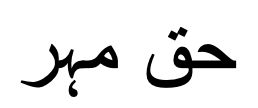 (haq mehr) has not been paid. Allah the Exalted states in Surah Al-Baqarah:
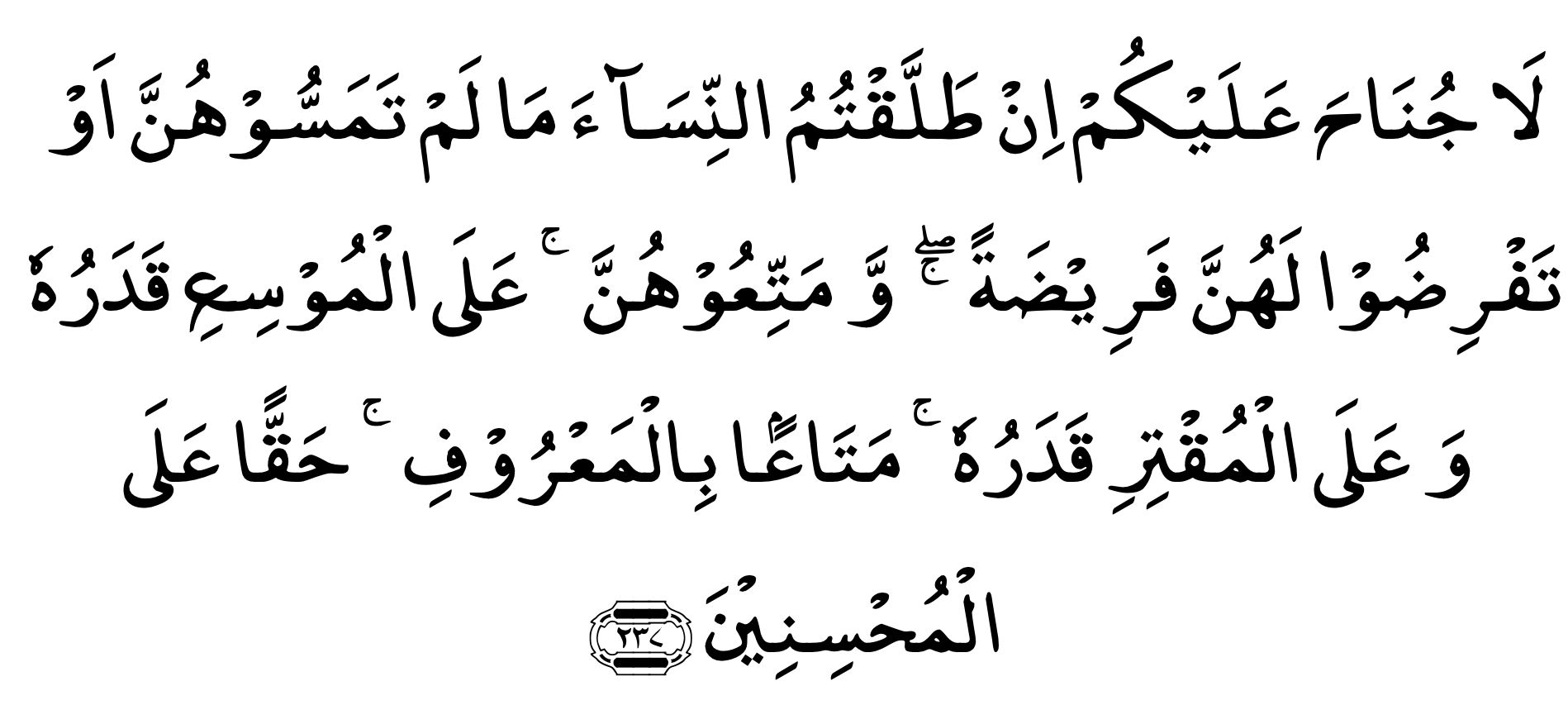
“‘It shall be no sin for you if you divorce women while you have not touched them, nor settled for them a dowry. But provide for them–the rich man according to his means and the poor man according to his means–a provision in a becoming manner, an obligation upon the virtuous.’ (2:237)
“Allah the Exalted states in this verse that when the husband is not willing to carry on with the relationship, no matter what the reasons, it is his obligation to be kind to the wife when breaking off and remunerate her according to his means. If Allah the Exalted has granted him affluence, the husband is commanded to demonstrate this. The God Who has granted him affluence has the power to terminate it if the affluence is not demonstrated by paying the dues. He has the power to change your affluence into scarcity if you do not pay your dues and are not kind. Therefore, if you wish to partake of the blessings of Allah the Exalted, be kind to the wife and demonstrate it with your wealth because Allah the Exalted does not burden any soul beyond its capacity. This is why it is stated that if someone is not able to give much he should pay whatever is within his means. Allah the Exalted states that if you are pious and abide by righteousness then it is obligatory on you to act with such kindness.
“The emphasis the Holy Prophet (peace and blessings of Allah be on him) laid on this matter is clear from the Hadith which relates that once an Ansari got married but divorced his wife before the marriage was consummated and her 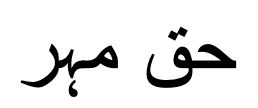 (haq mehr) had not been fixed. When the matter was brought to the Holy Prophet (peace and blessings of Allah be on him) he asked the man if he has given the woman anything by way of favour. The Companion replied, O Prophet of God! I do not have anything to give her. The Holy Prophet (peace and blessings of Allah be on him) said, if you do not have anything, give her the cap that you wear on your head. (Ruhul Ma’ani, Volume 1, Page 745-746, Commentary on Suratul Baqarah, Verse 237)
“This illustrates how much stress the Holy Prophet (peace and blessings of Allah be on him) laid upon fulfilling the rights of women and looked after them. I mentioned earlier regarding an instance where 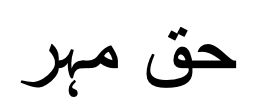 (haq mehr) was not settled, that even then one must give something [to the wife]. However, what is to be done in the instance where haq mehr has been pre-settled? The verses that follow the verse that was recited earlier give a very clear commandment that in the situation
 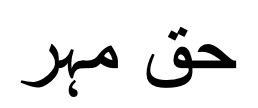 (haq mehr) has been settled but the marriage has not been consummated, half of it should be paid.”
(Friday sermon delivered on 15 May 2009 at Baitul Futuh, London. Published in Al Fazl London 5 June 2009)